How to Horse...
(drawing) horses 101
I grew up on horseback (obvious from the rest of this site). I have noticed over the years, many fine illustrators (especially in the fantasy, comic, gaming, and middle reader genres) who didn't grow up on horseback; illustrators who can draw an entire spaceport, create convincing characters, excellent architecture...
...and clearly have never seen a live horse in their entire existence.
If you are a beginner, anything you put on paper is practice! Put lots of stuff on paper, you'll only get better. And do your research. Here's how to horse...
If you are an experienced artist, but don't know much about horses, here's how to horse...
...and clearly have never seen a live horse in their entire existence.
If you are a beginner, anything you put on paper is practice! Put lots of stuff on paper, you'll only get better. And do your research. Here's how to horse...
If you are an experienced artist, but don't know much about horses, here's how to horse...
Gooberland
(and how to avoid it)
- It's ridiculously easy to google pictures of horses. Just do it.
- You can easily find their actual colors, patterns (pinto, leopard complex, zebra hybrids, brindles, chimeras, roans, and somatic mutations), gear (and how it actually works), and how a rider really sits on a horse, of gaits, action, expressions.
- Good artists do not draw from their imagination until they have understood reality. Study reality, then you can bend it like fence wire.
- Cartooning especially requires understanding reality first: then you know what to exaggerate, what to leave as is, and what to leave out.
- The best animators study real animals first, then cartoon, exaggerate, and animate (you have to understand the reality to know what to exaggerate, and what to understate).
- "It's only for five year olds" is not a thing. A well told/illustrated story is rooted in truth. Kids, especially, need well constructed, authentic tales.
- Reigns are for Kings, reins are for horses. Reins are what you steer the horse with. Yes, it is plural, there are two.
- Anatomy ...sorry, but your wargame hero is going to survive about two seconds because his horse will break down with those legs..."but it's a cartoon" is not a thing. Good cartoons begin with reality, and then you bend it like fence wire.
- Tack Oh nooooooooo! Barbie is dooooomed!!! Because her bridle is going to fall off and her equine is going to gallop off into the next county after trampling her to death. See Also: Bucking Girth of Doom. See also, most of Santa's reindeer harness. Disney cough Cinderella cough no crownpiece cough, so the bridle falls off leaving Our Hero is dire straits.
- Gaits: that horse looks like a confused centipede.
- Colors: sorry, only birds, dragons, heffalumps and wombats come in that shade of...something.
- Patterns: that's fine... if it was a cow. Cats, dogs and cows have entirely different spotted patterns than horses.
That said, if you are an amateur and doing this to learn or for fun... still do your research... but anything you put on the page is practice. You get better with practice.
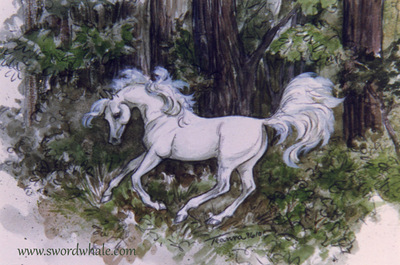
click here for my anatomy board on Pinterest, and some goodies by experts like George Stubbs!
Helpful Boards on Pinterest
Anatomy
http://www.pinterest.com/swordwhale/drawing-horses-101-anatomy/
Action
http://www.pinterest.com/swordwhale/drawing-horses-1015-action/
Horse colors (it's weirder than you think)
http://www.pinterest.com/swordwhale/drawing-horses-102-colors/
Leopard Complex: Appaloosas, Knabstruppers, Noric Horses, and spotted longears
http://www.pinterest.com/swordwhale/drawing-horses-103-seeing-spots/
Pintos and Paints (and why they are sometimes two entirely different beasts, and sometimes the same)
http://www.pinterest.com/swordwhale/drawing-horses-104-pintos/
Tack, Horse gear, bridles, saddles, harness
http://www.pinterest.com/swordwhale/drawing-horses-105-tack/
Longears: Donkeys, Mules, Hinnys... what?
http://www.pinterest.com/swordwhale/drawing-horses-107-longears/
Really good professional and amateur horse art
http://www.pinterest.com/swordwhale/drawing-horses-106-epic-win/
Horrible failures that people actually got paid for (the agony, the horror)
http://www.pinterest.com/swordwhale/drawing-horses-epic-fail/
Really awesome carousel horses, rocking horses and other classics (how to do horse art right)
http://www.pinterest.com/swordwhale/carousel-horses-and-classic-rockers/
Icons of my youth: Sam Savitt and Wesley Dennis, awesome equine illustrators
http://www.pinterest.com/swordwhale/great-equine-illustrators-savitt-and-dennis/
http://www.pinterest.com/swordwhale/drawing-horses-101-anatomy/
Action
http://www.pinterest.com/swordwhale/drawing-horses-1015-action/
Horse colors (it's weirder than you think)
http://www.pinterest.com/swordwhale/drawing-horses-102-colors/
Leopard Complex: Appaloosas, Knabstruppers, Noric Horses, and spotted longears
http://www.pinterest.com/swordwhale/drawing-horses-103-seeing-spots/
Pintos and Paints (and why they are sometimes two entirely different beasts, and sometimes the same)
http://www.pinterest.com/swordwhale/drawing-horses-104-pintos/
Tack, Horse gear, bridles, saddles, harness
http://www.pinterest.com/swordwhale/drawing-horses-105-tack/
Longears: Donkeys, Mules, Hinnys... what?
http://www.pinterest.com/swordwhale/drawing-horses-107-longears/
Really good professional and amateur horse art
http://www.pinterest.com/swordwhale/drawing-horses-106-epic-win/
Horrible failures that people actually got paid for (the agony, the horror)
http://www.pinterest.com/swordwhale/drawing-horses-epic-fail/
Really awesome carousel horses, rocking horses and other classics (how to do horse art right)
http://www.pinterest.com/swordwhale/carousel-horses-and-classic-rockers/
Icons of my youth: Sam Savitt and Wesley Dennis, awesome equine illustrators
http://www.pinterest.com/swordwhale/great-equine-illustrators-savitt-and-dennis/
Anatomy
Your first job is to google George Stubbs. He spent a lot of time in the 1700s dissecting horses to understand their anatomy. He was the finest horse artist of his time... and pretty much any other time.
See Also: Sam Savitt, Wesley Dennis, Frederick Remington, Charles Russell. There are more.
Feet: Equines have one large toe; the hoof. Other hoofed animals have two toes (even-toed ungulates like cows, pigs, deer, antelope). Some other odd-toed ungulates (horses are odd-toed) have multiple toes (think tapir, elephant, rhino...rhinos are horse relatives).
It makes me nutz when someone draws a donkey or zebra with cloven hooves! No, they are equids!
Equines are: horse, donkey and zebra.
Ass, donkey and burro are the same critter.
A mule is NOT a donkey! A mule is a cross between a male donkey and a female horse (they look more or less like a large donkey...with a fuller tail, and some other slightly horsey characteristics).
A hinny is a cross between a female donkey and a male horse (they look more horselike, but slightly odd).
A zonkey is a cross between a donkey and a zebra (they look like donkeys wearing striped stockings).
A zorse is a cross between a zebra and a horse. (They look like very horselike, in regular horse colors, overlaid with stripes, they actually strongly resemble primitive breeds like the Fjord, or Przewalski). Also called zebra mules.
The crosses are usually sterile.
A Przewalski horse is a rare, primitive, wild horse (looks like a cave painting). Scientists yet debate where it fits on the taxonomic tree; whether it is a separate species of equine (recent studies suggest it diverged from modern horses 160,000 years ago). It has 66 chromasomes, while the domestic horse has 64.Today's Przewalskis have some modern domestic DNA; crossed into the remaining Przwalskis to bring them back from the brink of extinction.
A Tarpan is an extinct European wild horse. 20th century efforts to recreate it have produced the modern Tarpan.
A quagga is an extinct subspecies of plains zebra (there are scientists trying to breed back to recreate them).
Kiang, Onager, and African Wild Ass are wild (never domesticated) donkeys.
The kunga is perhaps the first human bred hybrid, seen in Egyptian art, pre-dating horses, pulling chariots and such, it is a cross between the domestic donkey and a now extinct wild ass (other species of wild ass are still around). Domestic donkey and wild ass have different numbers of chromosomes, so the offspring are sterile.
A mustang is a feral horse (a wild horse with domestic ancestors). Types and bloodlines vary, but the original mustangs were brought to the Americas by the Spanish; the Spanish Colonial Horse. remnants can be found in the Americas in some western herds as well as barrier island herds on the east coast, in South Carolina's Marsh Tackys, and Florida's Cracker Horses.
See Also: Sam Savitt, Wesley Dennis, Frederick Remington, Charles Russell. There are more.
Feet: Equines have one large toe; the hoof. Other hoofed animals have two toes (even-toed ungulates like cows, pigs, deer, antelope). Some other odd-toed ungulates (horses are odd-toed) have multiple toes (think tapir, elephant, rhino...rhinos are horse relatives).
It makes me nutz when someone draws a donkey or zebra with cloven hooves! No, they are equids!
Equines are: horse, donkey and zebra.
Ass, donkey and burro are the same critter.
A mule is NOT a donkey! A mule is a cross between a male donkey and a female horse (they look more or less like a large donkey...with a fuller tail, and some other slightly horsey characteristics).
A hinny is a cross between a female donkey and a male horse (they look more horselike, but slightly odd).
A zonkey is a cross between a donkey and a zebra (they look like donkeys wearing striped stockings).
A zorse is a cross between a zebra and a horse. (They look like very horselike, in regular horse colors, overlaid with stripes, they actually strongly resemble primitive breeds like the Fjord, or Przewalski). Also called zebra mules.
The crosses are usually sterile.
A Przewalski horse is a rare, primitive, wild horse (looks like a cave painting). Scientists yet debate where it fits on the taxonomic tree; whether it is a separate species of equine (recent studies suggest it diverged from modern horses 160,000 years ago). It has 66 chromasomes, while the domestic horse has 64.Today's Przewalskis have some modern domestic DNA; crossed into the remaining Przwalskis to bring them back from the brink of extinction.
A Tarpan is an extinct European wild horse. 20th century efforts to recreate it have produced the modern Tarpan.
A quagga is an extinct subspecies of plains zebra (there are scientists trying to breed back to recreate them).
Kiang, Onager, and African Wild Ass are wild (never domesticated) donkeys.
The kunga is perhaps the first human bred hybrid, seen in Egyptian art, pre-dating horses, pulling chariots and such, it is a cross between the domestic donkey and a now extinct wild ass (other species of wild ass are still around). Domestic donkey and wild ass have different numbers of chromosomes, so the offspring are sterile.
A mustang is a feral horse (a wild horse with domestic ancestors). Types and bloodlines vary, but the original mustangs were brought to the Americas by the Spanish; the Spanish Colonial Horse. remnants can be found in the Americas in some western herds as well as barrier island herds on the east coast, in South Carolina's Marsh Tackys, and Florida's Cracker Horses.
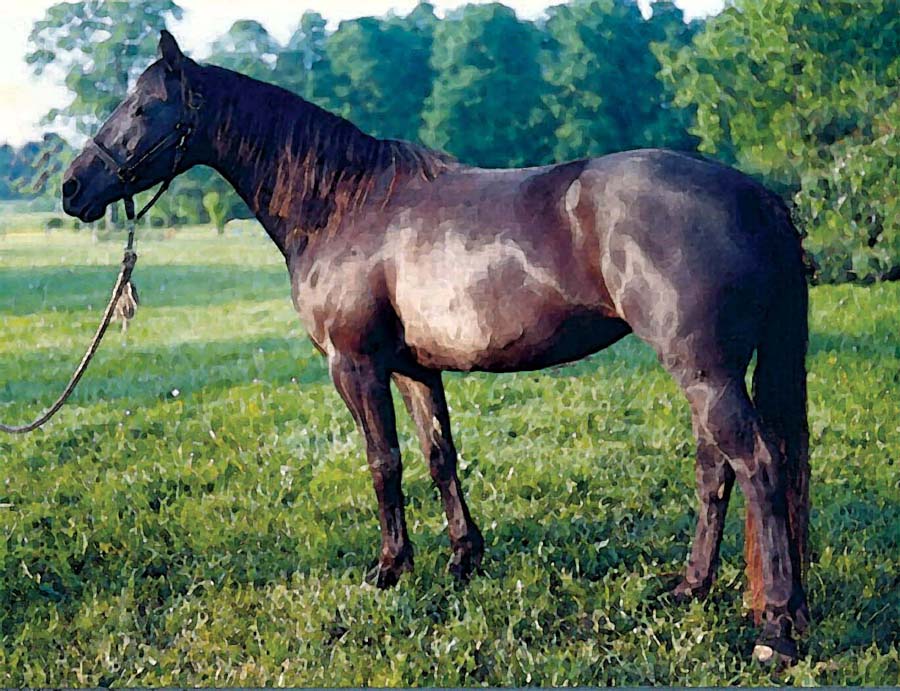
Olori Eldalie, my mustang mare from Oregon.
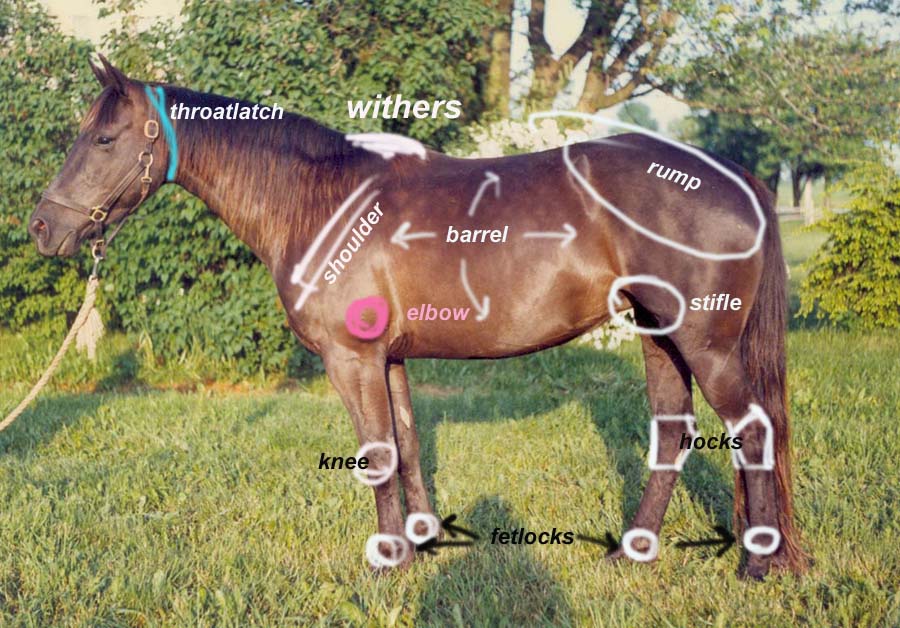

Bones: a rough sketch. Knowing what's under there helps you build a drawing correctly, and articulate movement.
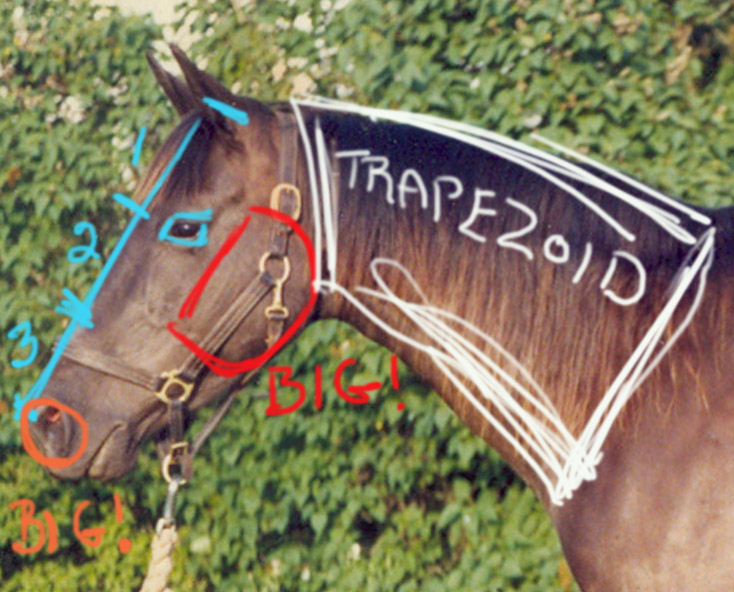
The eye is about a third of the way down the head, and it's LARGE! The nostrils are also huge (horses "drink the wind", to run fast and efficiently).
The jaw, too is very large. the mouth is small, but the teeth go way up into that red area of the jaw. There is a toothless space at the corner of the mouth: this is where the bit fits. The blue angles in the body are shoulder and upper arm (as on humans)... and hip and upper leg (as on humans). The front leg's elbow is still part of the main body and where the leg starts. The hind leg's "knee" (stifle) is close to the body too. The rest of the leg is the same as your leg from the knee down.
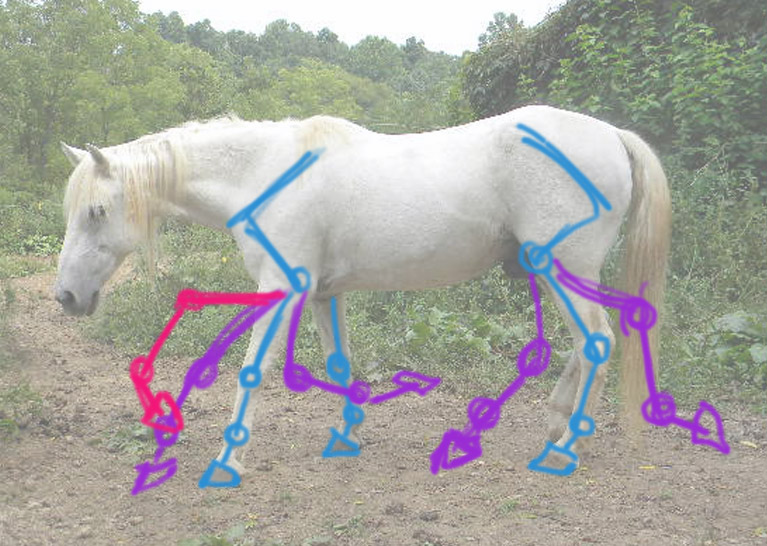

front legs
|
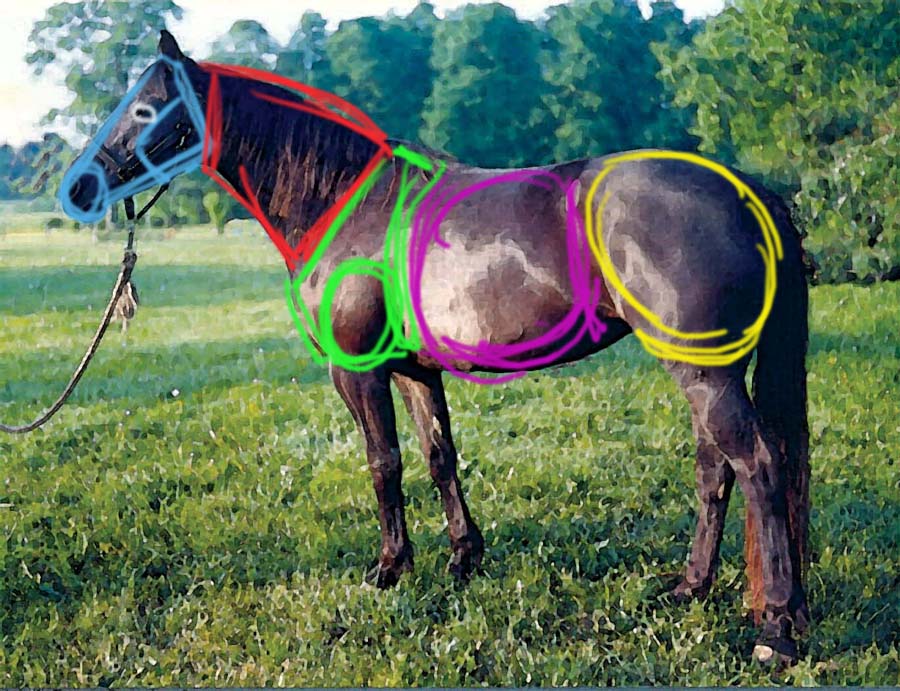
Body masses: the head is a trapezoid, so is the neck (but it's flexible). Note the round barrel (purple) the triangular shape of the shoulder area, the large muscle mass above the elbow.

Horses are square: From nose to withers is about the same distance as from withers to tail. The distance from withers to belly is about the same as from belly to fetlock (long legs). The body (minus head and neck) is square in profile ( as long as it is tall). Lower legs should be straight and clean (no lumps).
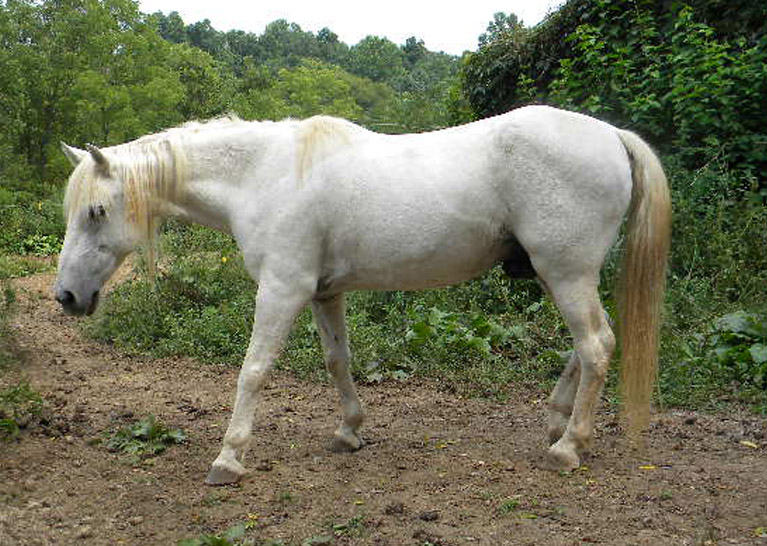
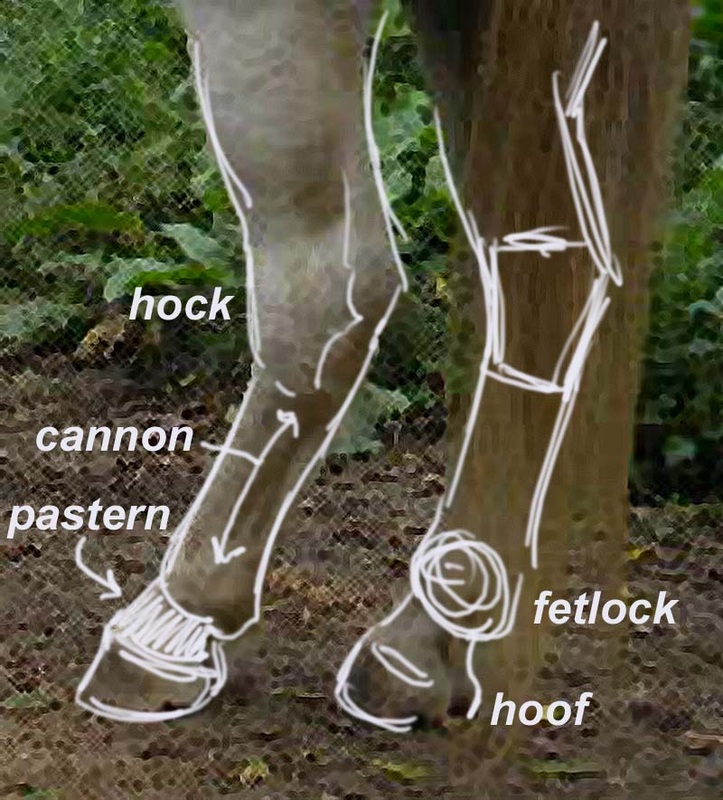
rear legs
|
Horses have long legs to run from danger. Most of the muscles to power them are in the shoulders and haunches. The upper leg (forearm and gaskin) are fairly muscular (especially on heavily muscled horses like draft horses and quarter horses). The lower leg is mostly bone, skin and tendons; long and straight. Kids and cartoonists (I have a nifty Hairy Trotter T-shirt which exhibits this) often muck up the rear legs. Here's how they bend in the pics above...Left:front pic, rear:right pic.
It's actually the same joint design as your dog or cat... only the knees and hocks are lower in cats and dogs, and everything from the horse's fetlock down is a paw in predators. The horse is essentially standing on one long toe, fetlock to hoof is one big toe.
It's actually the same joint design as your dog or cat... only the knees and hocks are lower in cats and dogs, and everything from the horse's fetlock down is a paw in predators. The horse is essentially standing on one long toe, fetlock to hoof is one big toe.
eyeballs
The biggest mistake artists make is putting the eyes on the FRONT of the head. Horses are prey items, their eyes are on the SIDES of their heads so they can see the wolfpack coming. They see all around themselves, even behind (except the part blocked by their own butts). Colors are: usually brown, but can be pale blue, greenish, hazel. A blue eye is usually near a white marking on the face... usually, I saw a Chincoteague pony who was a solid bay, with two blue eyes. Hazel, golden or greenish eyes are usually on a horse that is a dilute color (cremello, perlino, champagne). One does not usually see the whites of the eyes; unless the horse is afraid... or an Appaloosa or pinto. The shape changes as they close or open their eyes.
Cartoonists and animators often break this design rule to make their cartoon horses more anthropomorphic.
Cartoonists and animators often break this design rule to make their cartoon horses more anthropomorphic.

Left eye, side view.
|
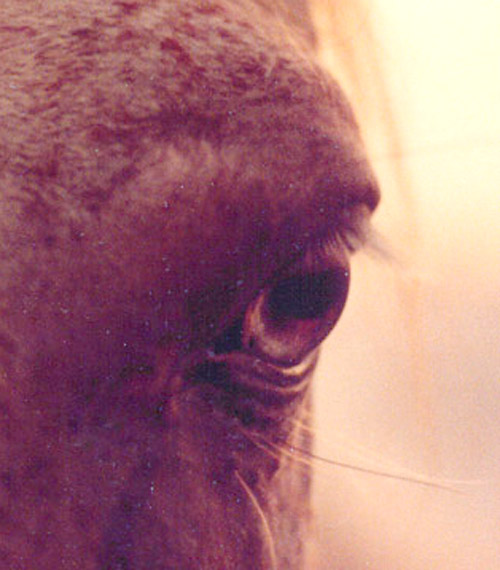
Left eye, front view, blue eye.
|

Right eye, side view, goat. Same pupil shape, different color.
|
Tack
Click on Svaha, below, or Saraf, right, to find more about horse gear.
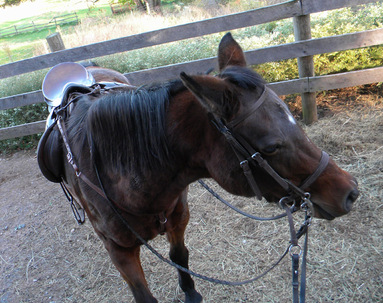
Svaha, in English gear
|
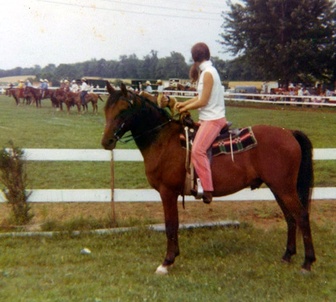
Saraf, in western gear
|
- The two biggest goobers by non-horsemen artists are bridles without crownpieces (the thingie behind the ears that keeps the bridle from falling off), reins that don't function, or are spelled "reigns" as in a king's reign
- and girths that are in the middle of the belly, or farther back, which makes it a bucking girth, and deadly. The girth goes behind the elbow.
- A bridle needs a variety of straps to hold it in place. I know, that horse above right did a sliding stop one time in a bosal (for which I did not have enough of the aforementioned straps), the bosal bounced off and I was sitting on a naked horse. Kind of scary.
- There are numerous riding styles, for various jobs that horse and rider might do, and various kinds of bridles, saddles and other gear (like breastplates and breeching, which keep a saddle from sliding forward or backward).
- Research your time period and style. Google is your friend.
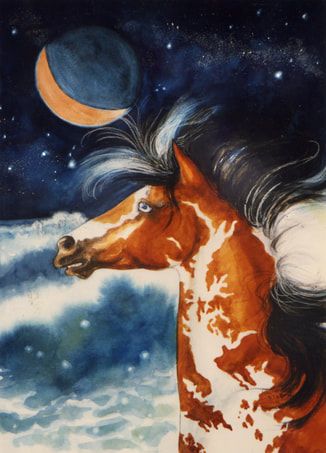
click on the Chesapeake Bay above for the basics of horse color...
Colors
- Horse DNA creates two pigments: red and black
- Three basic horse colors: red (chestnut/sorrel), bay (red body, black points) and black.
- Dun (a gene overlaid on the 3 basic colors) is the primitive original color for all 3 equids (yes, zebras are dun, they've just taken the striping to an extreme, and dun donkeys and horses have stripes).
- A bunch of other totally confusing (some yet undiscovered) genes modify red and black pigment into the rainbow of color that is horse.
Then there's donkeys...
...and zebras...
...and the crosses.
Here's some resources...
My Pinterest site has many horse boards...
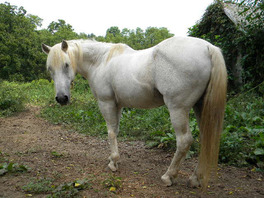
colors
|
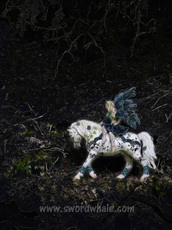
seeing spots
|
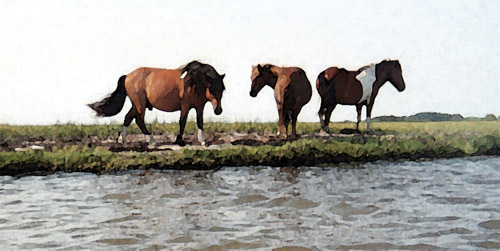
pintos
|
Gaits
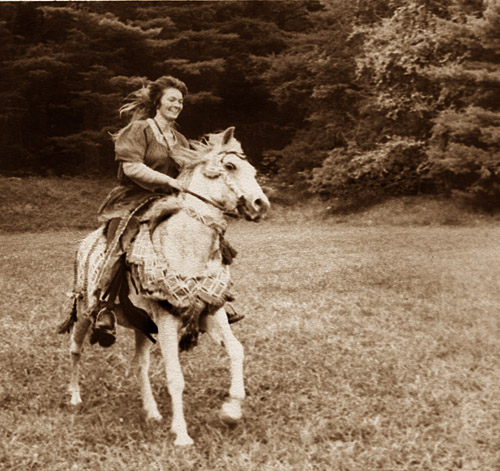
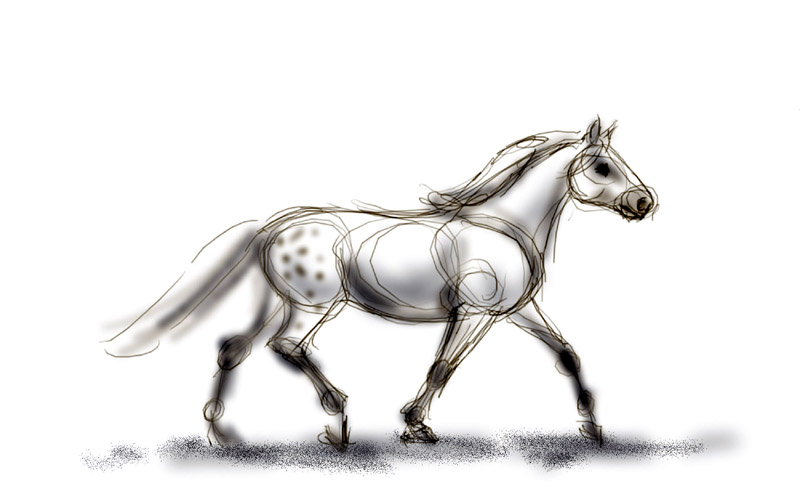
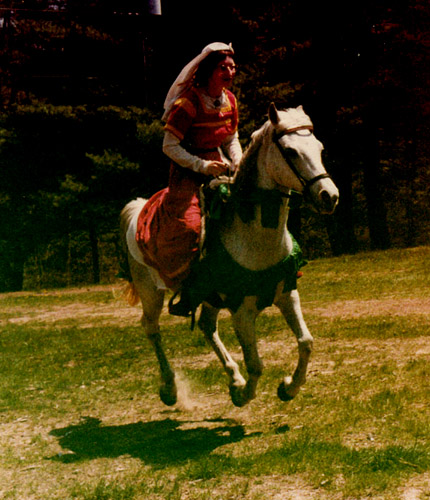
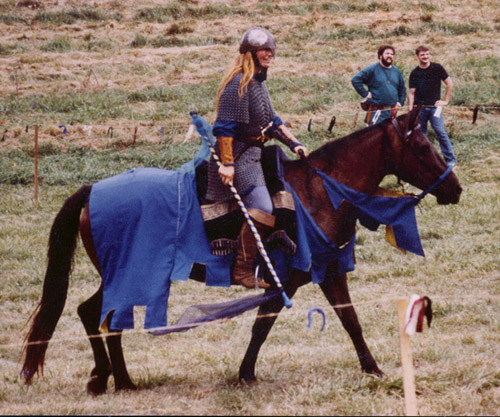
- Horses walk (four beats),
- trot (two beats) and
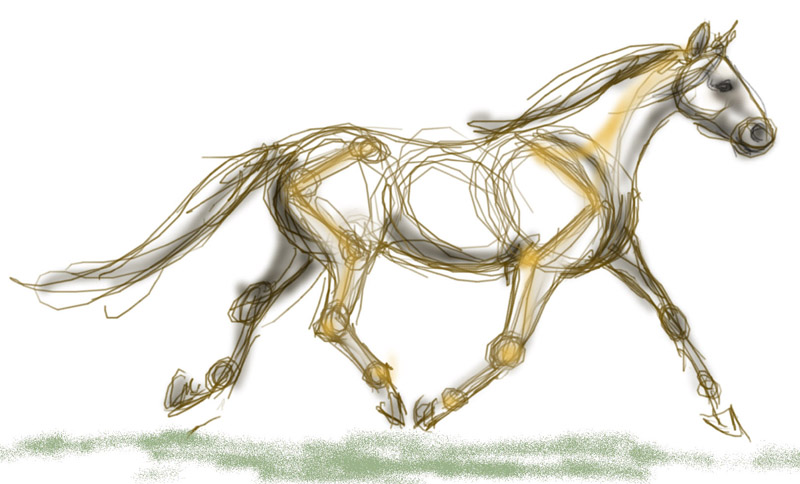
- gallop (three or four beats).
- The canter (three beats) is just a slower, more collected gallop.
- Then there's the multitude of gaited horses which do a smooth gait that is somewhere between a walk/trot/pace: google Tennessee Walker, rocky Mountain Horse, Icelandic Pony, Paso Fino, or just gaited horses, or easy gaited horses. Tons of videos on youtube.
- Did I forget pace? Trotters move legs in diagonal pairs (left front and right rear together), pacers in pairs on the same side (both left legs move forward together, then both right).
- Click on the pics below for some videos, or type in "horse trotting, horse walking, horse cantering, or horse galloping" as a youtube search engine.
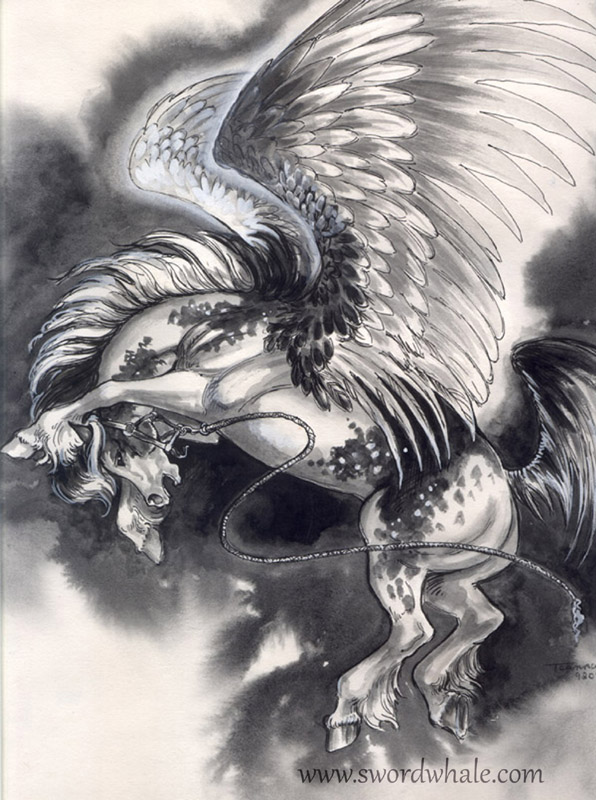
click here for more: Gaits of horses
|
|
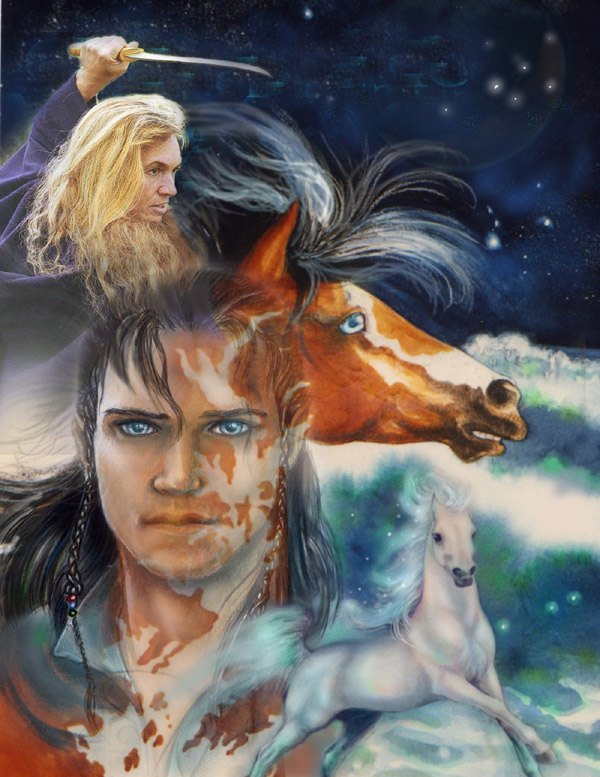
click here for more: go ahead, draw a horse
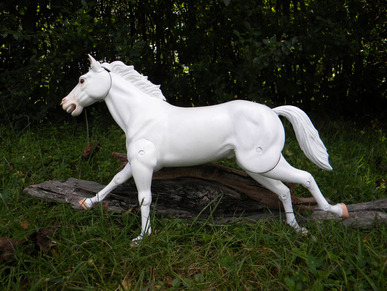
Sometimes it helps to have a model... a real model made of plastic. It is three dimensional, you can look at it from various angles (perhaps the photo reference you have is not the right angle), and some are poseable (like this vintage Gabriel Toys Lone Ranger's Silver from 1973). Beware, you are using someone else's art as reference, and you are copying their mistakes (while I love this Silver, he has some anatomy issues: his head is rather clunky, he has a ewe neck and sickle hocks, but overall, he is fun if posed well). Click on the pic for more...
