Arthur Christmas: move over Hermie... 12/13/2011
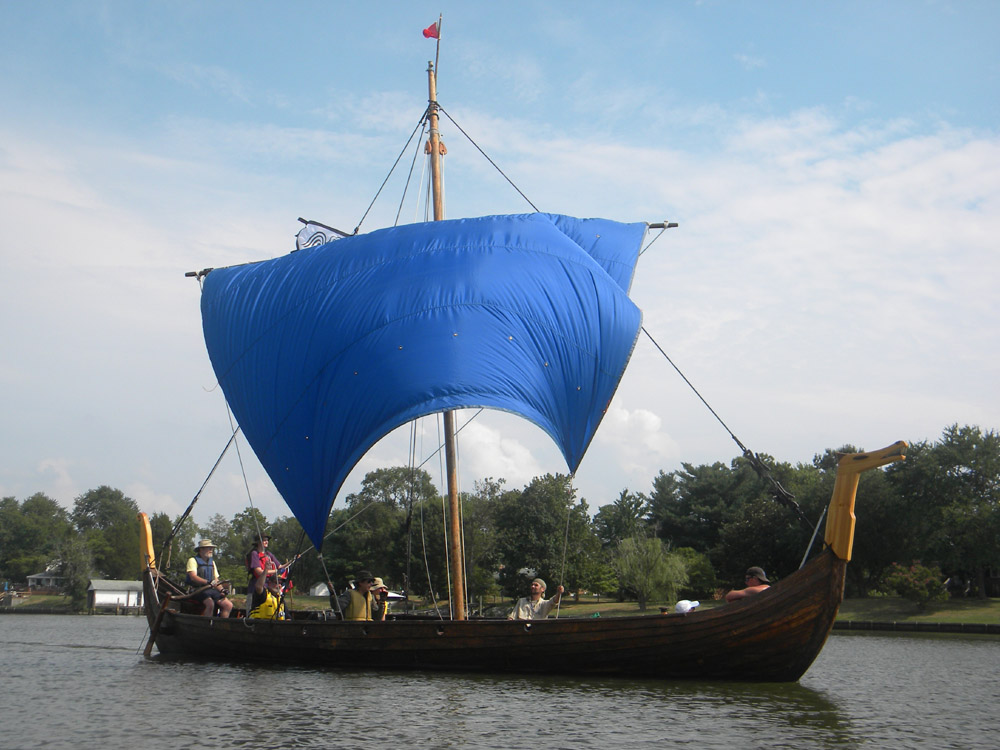
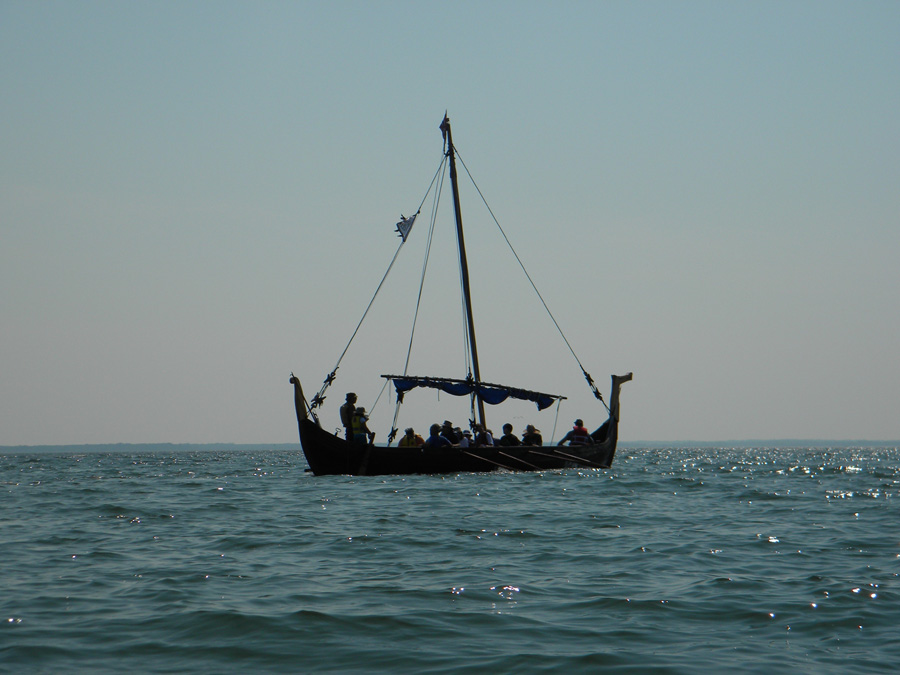
Arthur Christmas When I was a kid, Rudolph the Red-Nosed Reindeer was the height of animation technology, it aired every Christmas without fail, and if I failed to see it, I had a ten year old meltdown. As an adult, I note the awfulness of the very basic stop motion animation, and the awesomeness of the classic Hero Journey structure of the story (read some Joseph Campbell if you don’t know what a Hero Journey is). As a kid I related to the misfits (Rudolph; Hermie the Elf who had the coolest job on the planet but wanted to be a dentist) and their struggles to find their place in the circle of life... ...oh, wait, that's another story. Enter the 21st century. Ho ho ho hum, another chipmunk movie, another rom com, another... What's this? Another offering by the awesome geekiness that is Aardman (or is it Aardmaan???). Those brilliant Brits who brought us Wallace and Grommit (and the Wrong Trousers), Curse of the Were-rabbit, a moon made of real cheese, a pet rat who gets Flushed Away, and a riff on WWII prison camp escapes called Chicken Run. They have left behind their clever stop motion animation, trading it for CG, as the Santas trade in the old sled of carved and bent wood for the S1 (which looks as if the USS Enterprise had spawned an illegitimate hatchling with a giant space squid). The CG still has the look of Aardman, of their great characterizations and designs (the S1 is actually quite awesome, and it's resemblance to the Enterprise may or may not be intentional; it certainly looks like what our generation thinks of as a spaceship). It's just easier to do snow, and hair, and stuff blowing around with CG (it's impossible with stop motion). Arthur is the younger, geekier son of the present Santa and Mrs. You know, the one who can never do anything right, the one who has the Perfect Older Brother Who Will One Day Be Santa (if the present, rather absentminded one ever ever retires!). The Older Brother With SixPack Abs, Christmas Camo, and a military haircut... it took me half the movie to realize his closecut goatee was in the shape of a Christmas tree. It's the stuff I loved about Rudolph in the 60s. Here, though, is a family we can identify with, imperfect, complex, warm, funny, the characters go beyond stereotype. They may begin as archetypes, but then they take off at mach ten in their own mad directions. There are fine little clues to character; Mrs. Claus, after playing the grandmotherly role of getting dinner ready and herding the family together, sitting down to the table with her sewing... we see some slashes on her jacket she is mending... she says something about polar bears and it's really good I took that defense course... There's Grandsanta, using a reindeer antler as a crutch. The old reindeer in the doggie Elizabethan collar (those things you put on dogs to prevent them from bothering a wound). The stable of young reindeer (animated beautifully; the artists clearly studied reindeer) whose first flight is rather like beginner surfers on really big waves. And the Elves. Despite my love of Rudolph and Hermie, my idea of Elf is Legolas from Lord of the Rings. Steely eyed and longbow wielding, able to talk to horses, trees, or rocks, run on snow, and take down a hundred orcs with only a knife. Well, these are short, funny looking, squeaky voiced... and somehow hilariously real. Sort of like the minions in Despicable Me...or not. Diverse. Bryony the Wrapping Elf who comes along on the journey (using her skills as a wrapper of gifts) is beyond brilliantly funny and quirky. Although I only figured out at the end of the film that she was a girl (must have been the mohawk). It is a film suitable for smallish kids…that will entertain the adults thoroughly. Up there with Pixar, with the finest offerings of Disney. Of Miyasaki. It is a film without villains. There is no grand battle of Good and Evil, only the quirky interactions of a hilariously real family. There is grand adventure; eye-popping “effects”, action that makes the price of 3D worth it. Each character has their own set of obstacles, their own Hero Journey to accomplish (even GrandSanta and the ancient reindeer). It has huge imagination. Small moments of warmth, of humor (the Elves holding up cell phones with pictures of burning candles, rather than real candles… the seal sliding off the surfacing S1… the polar bear who wanders into Santaland because, darn it Arthur, SHUT THE DOOR, IT’S THE NORTH POLE! It bears watching a few times over; there are a plethora of nifty details you’ll miss the first time…or the second…or the 48th. It’s one you want to own, and savor over and over. Move over Hermie; Bryony kicks butt! Add Comment An email missive from one of our longship company members clarifies (with a heavy dose of common sense, and humor) the legend that Vikings burned their ships before a raid to prevent retreat. (A. they're the Ultimate Tough Guy image, you thing they're gonna retreat? B. how're they gonna escape with the booty...with no ships...) This was so good I had to post it... On 10/13/2011 8:06 PM, T Neill wrote: "Someone e-mailed Janet and me asking for help debunking a myth that Vikings burned their ships before a raid to prevent retreat. Here is our reply. Heavy on the snark but perhaps good for a laugh. Research those myths before you pass them on, folks!" "Dear Person Who Asked – Extraordinary claims require extraordinary evidence. Ask her where is her evidence that they burned their ships upon landing? For one thing, it’s absurd on its face.Viking raids were snatch and run. Not snatch and then twiddle their thumbs on the beach loaded down with loot they have no way of moving.These guys weren’t stupid. They were vastly outnumbered in England, Scotland and Ireland when the raids started. If they’d stuck around with no method of retreat, the locals would have ganged up and killed them dead. King Æthelread wouldn’t have been so Unræde and King Ælfred wouldn’t have needed to be so Great if the Vikings had conveniently cut off their own retreat.Their very success was because they could jump back in their ships and raid somewhere else faster than word could spread they were there.Come on, apply some rudimentary tactical logic. Even we know this stuff and we don’t even play a soldier on TV!This isn’t military policy from an organized State; it’s biker gangs raiding under-defended gold-studded monasteries. Which then morphs into the Danish Mafia running a protection racket in Danegeld. For much of the Viking age, they’d threaten to invade then allow themselves to be bought off to go away. King AEthelred the Unrede (Ill-advised) paid thousands of pounds of silver in Danegeld. Can’t take that home if they’d burned their ships. In 865 a great army of Vikings invaded England and stayed for years, raiding up and down both the Eastern coast of England and the western coast of Europe. Can’t do that if they burned their ships. Some stayed and settled in the Danelaw in England. Some were offered land in France to stop them sacking Paris. (Northman’s Land--Normandy) There’s one hundred years between the beginning of the Viking raids and the Danelaw being settled. What did they do in all that time with their ships burned?Run from village to village chased by the whole of the Fyrd?A bit tiring carrying all that loot I should think. The Vikings used their ships as transport so why burn them? Even if they won, they’d want to keep them for future raids, going home, and trading. Few Vikings were only raiders. Most were also traders as opportunity presented itself. Viking is a job description not an ethnic designation. Vikings raided. They didn’t settle. They took their loot home and raided and traded more. Can’t do that if they’ve burned their ships. Other Norse settled and even they wouldn’t burn their ships. They needed them for trade and transport. York, Dublin, Cork, etc. were all trading towns that relied on trade from unburned ships for wealth. Take the Battle of Maldon. The Vikings in that battle had been raiding along the Essex coast before winning that battle. (A classic case of the English snatching defeat from the jaws of victory.) The Vikings wouldn’t have been able to raid along the coast and get to Maldon if they’d burned their ships when they landed. If they burned their ships (to force themselves to stay) then how did they go home to bring their wives and kids back to settle? Raiding ships aren’t meant to hold cattle and goods. Knars (a wider sort of ship) hold cattle and goods for settling. But word has to get back to Norway or Denmark for Wives and kids and cows to come over to the conquered land. Need an unburned ship for that. Let’s see. King Harald Hardrata of Norway invaded England in September of 1066. He came with over 300 ships and the remnants of his army only needed 24 ships to return to the Orkneys and overwinter before returning the rest of the way to Norway. Well known historical data. The remnants wouldn’t have been able to get back to the Orkneys if they’d burned their ships. The first recorded Viking raid in England was on the Monastery of Lindisfarne in 793 ad. Lindisfarne is an island and the raiders didn’t stick around. Two months later the Monks were writing to the King and complaining about the raid. These raids were followed by Jarrow (794) and Wearmouth (794), and Iona (795, 802 and 806). These raids were exclusively for money—if the Vikings burned their ships, how did they take the money away? And where did they take it to? Plus, Iona is an island. Building a ship takes time--hundreds of man hours--and skill. And money. Why burn a very valuable asset?" Earthquakes, hurricanes, pirates, sprit tops'ls and duct tape...(or How I Spent My Summer Vacation) 08/26/2011
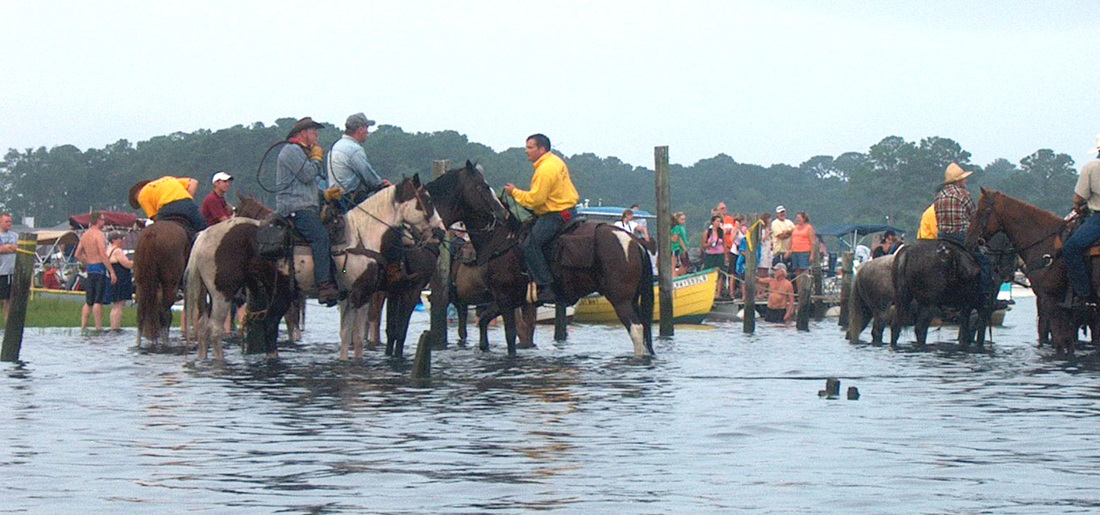
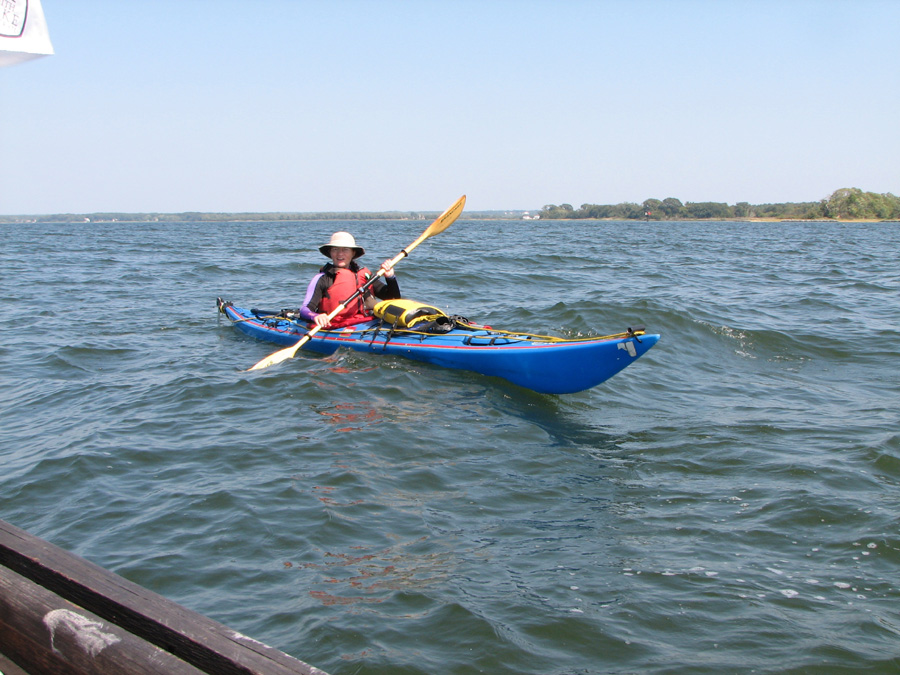
My vacation this year included; an earthquake, a pirate voyage, a hurricane (and forced evacuation from a barrier island), pipefish, sandburrs, wild horses, spaceships and cowboys, and a lot of duct tape. Each year (or more often if I can make it) I make a sort of pilgrimage to a set of barrier islands off the coast of Maryland and Virginia. Assateague is a long, low dragon shape, stretched across the MD/VA border. Chincoteague lies like a tiny egg inside the curve of Assateague's "tail" (The Hook). Assateague is home to wild horses, waterfowl, and sea life. Chincoteague is home to watermen, saltwater cowboys, art galleries and nifty shops, and the only wild horse roundup on the east coast. First, the pirate ship. Lewes DE lies on the edge of DelMarVa. Occasionally, during the summer, it is the home port of a "pirate ship", the Kalmar Nyckel, a glorious big blue wedding cake of a vessel, carved and decorated and square rigged and cannoned, with a leaping lion on the bow and merrows on the stern and fighting tops aloft (so the crew can go, literally, "over the top"). A reproduction of the 1638 ship that brought the first settlers to Wilmington DE (New Sweden then), she does "pirate sails" out of Lewes, out into the open waters of the Delaware Bay. The guests are invited to help haul on lines, to sing sea shanties, to perch on windlass or cannon, to take ridiculously cool pictures of themselves with a set of 1630's rigging or deck carvings as the set. The crew is in period garb. They climb picturesquely aloft... with a purpose; to set the 17th century windmachine that will haul us out into the High Seas without fossil fuels (mostly, they do have backup engines). One young man tells a fun tale of a kid who becomes a pirate for a day. Another talks about the real history (and misconceptions) of the Golden Age of Piracy. We learn Captain Lauren's last name is Morgan... we think she's a lot cooler than the guy on the rum bottle. We form a line and help set a tops'l. It's a lot harder than jumping in the car and turning a key. The Helmsman steers from a cubbyhole about the size of Harry Potter's closet. There is a huge stick (the whipstaff) attached to a tiller below the deck he's standing on, (the tiller attaches to the rudder, the whipstaff gives some mechanical advantage to the mere human attempting to heave the 100 foot ship on a new course). From HP's closet, the helmsman can see masts, yards, deck stuff, tourists, more tourists, rigging, and a tiny bit of water to port and another tiny bit to starboard. He mostly listens to the orders coming from the Captain, above. We set only the tops'ls (the big square bits above the bigger square bits on the masts... masts = levers that the wind pushes on... a light wind pushing on sails higher up... topsails... is more efficient) as the wind is very light, and the deck is very full (of tourists). We also set the sprit tops'l. The wha??? you say. Pay attention, this is significant. The boat has a big pointy thing in front: the bowsprit. It helps hold the whole thing together (standing rigging runs through the bowsprit and the masts, like a big string puzzle). The bowsprit on a 17th century Dutch vessel of this type has a sprits'l (a square sail slung low on the bowsprit like a baby's bib) and a sprit topsail, hung a bit higher. Kalmar is the only ship in the western hemisphere to have a sprit tops'l, and she doesn't usually set it. There's a guy from some museum ( in, I believe it was Sweden) who is sailing the next day to study how this works (they have an original vessel of this time period, raised from where it sank in a harbor on its maiden voyage; it was preserved by freshwater in the port... and the sewage... all of which created an anaerobic environment which preserved the ship). Not quite as ordinary as boarding a comuter flight to Miami. Somewhere in the midst of the voyage, over the ship's radio, comes the earthquake report. Back in PA, my uncle is sitting in the car, in a parking lot, waiting for my aunt. He feels someone "shaking the car"...turns around to see no-one. Kalmar sails back to port with no rumbles felt, no tsunamis seen. We get some pirate booty (T-shirt, a cool line drawing of Kalmar) and I head south by land. Chincoteague VA, island of the wild ponies, made famous by a 1940s book, Misty of Chincoteague (and 60s film) by Marguerite Henry. I saw it first in 1972, the last year Misty (the pony in the story) was alive. I toured her stable, saw her snoozing in the back corner of her stall (she was old, and her palomino gold color was faded to sand), and didn't take a picture (the flash would have disturbed her). She died a few months later. I never got the picture. I park, find my buddies, we eat dinner, and someone produces a set of DVDs of a short run TV series called Firefly. It's a sort of post-apocalyptic sci-fi/western with a crew of pirate-smuggler-privateer types flying under the radar of the Evil Totalitarian Government that controls the galaxy. Sort of the opposite of Star Trek. The last image in the opening credits pretty much sums it up: a herd of thundering horses with a spaceship (firefly class, the ship of the title) zooming overhead. Over the next few nights, I find the need to stay up way too late, have too many beers (two, which leads to a headache, and a need to drink lots of water and find the porta-bucket in the middle of the night), and absorb the entire series at once. I get up early for the Marine Explorers program done by the Park Service, we launch a couple of kayaks into Chincoteague Bay, I test the underwater housing from the Dark Ages given to me by a buddy (anybody remember the old Jaques Cousteau specials? Yeah, it's like that stuff), I use the giant sized kitchen strainer to sift out eelgrass, algae, sea-lettuce and a pipefush from the grass beds in the Bay, climb the lighthouse in winds that led the lighthouse interpretive guide to suggest I batten down my hat, I try leaping the waves like I did when I first came to Assateague... My knees reminded me that leaping like a dolphin is for 20 year olds. Chris finds the first sandburr. I am aware of this by the sudden shrieks reminiscent of a torture scene in Firefly when the Captain is kidnapped by a psychopathic mobster. I find sandburrs (for the record, Teva sandals, the hiking/river/kayaking sort, are immune...the flipflops are like wearing marshmallows where sandburrs are concerned), Heather's bare feet find more sanburrs. She, always barefoot, resorts to the dreaded Shoe. I find more: on the edges of my longish shorts, stuck to the webbing of my sandals, under my toes... The islands are full of vampires: several kinds of bloodsucking flies, several dozen kinds of bloodsucking mosquitoes, 3 kinds of ticks, and sandburrs. Perhaps if the Twilight series had been written here, it would actually be scary. Then we got wind of the weather... To quote the guy at the beginning of The Little Mermaid..."hurricane a'comin'!!!" The skies remained sunny, the wind too brisk now for kayaks. The birds went about their business as usual; egrets and blue herons, tricolored herons and sandpipers fishing the shallows, beaks pumping like sewing machines in the sand at the sea's edge. Pelicans soared over the waves like pteradactyls. A mysterious fin surfaced near my kayak (maybe a dolphin). Oh, we'll just have some rain the last two days of my vacation...I'll drive home Monday, as planned. Went to the museum that used to be called The Oyster Museum. It's grown in scope from its days as an ode to the local industry. There are exhibits on local culture, waterfowl, the oyster industry, history, the fire company, watermen, the pony roundup...and Misty. Really, Misty herself, in all her stuffed, taxidermied glory (along with her daughter, Stormy, who I once sketched alive). Taxidermy done by a well-meaning local craftsman with a rather random knowledge of horse anatomy. I take pictures, mostly video, anyway, an experiment in filmaking (shooting around the bad bits, trying to make the stuffed horses look more... unstuffed). I burn some memory card, abosorb Vast Knowledge until my brain is full, and my eyes glassy. The guys at the front desk are packing their bags, their boxes...the entire museum, in fact, is being battened down. Back on the beach, the Park Service is using some interesting large Tonka toys to move the changing rooms and porta-pottis off the beach. The girl at the Kite Koop advises me to leave Thursday night, before the causeway (the only way on and off the island that doesn't require a boat) is closed, and we are actually stranded on a desert island. And before the traffic to the north becomes a dreaded crawl through gale force winds and closed bridges and torrential rain. At the rental house we hover around the weather channel, watching the worst storm since 1962 (the nor'easter that inspired Stormy; Misty's Foal) form and advance toward the Outer Banks. We learn the beach will close at ten tonight, and not reopen until the storm has passed. We opt for food, beer, and more episodes of Firefly. But first, three of us pile into Janet's car and head for one last look at the beach. The sky sputters. Pours. We drive in the dark out the causeway to Assateague, headlights of other cars occasionally shining through the downpour. Water pools on the road; rain? or rising seas?? Heather rumbles from the backseat as if she is driving a dogsled; "...gee, gee, no haw...stay out of the lagoon!" I remember my dive instructor said to never drive through standing water.... I can't remember how much it takes to sweep you off the road and into the lagoon. The road becomes packed sand with beach parking lot signs. The rain peters out into a fine drizzle. We step out, headlamp shining on rolling surf. I turn the light out. Dim light, the continual roar of surf on sloping sand. The flash of the distant lighthouse on the white breakers; blink-blink....blink-blink.... Friday am, we aquire tarps, plastic, plywood, and copious amounts of duct tape, battening down our buddy Heather's houses, and treasured old books. Chincoteague issues an evacuation notice, rental houses are called; non-residents must be off-island by 6pm... residents by the next day. We pack, reluctantly, under skies that morph from rain to sun to cloud to sun to drizzle to sun. Vultures perch on the roof of the condo. The lighthouse is visible across the marsh, sentinel from the Civil War, on the highest piece of ground for miles around, double walled brick tower still flashing its light through the rain Thursday night. I drive north Friday under sunny skies, calm hot windless skies. The mighty landship Fearaf (my 1983 Ford Econoline van) is loaded with gas, food, water, blankets. I only fear getting out too late and sinking the van. And the Traffic Jams of Doom. Chincoteague's Main street is being boarded up (the bay is only a few yards away, and most of Chincoteague is actually below sea level). I take some last pictures, throw good wishes at some guys boarding up a store front. They grin, keep working. They've been through it all before. No big deal. One of them says; "Everybody gets all excited when God starts rearranging the furniture..." The Traffic of Doom does not materialize, only some Friday evening rush hour traffic in Dover and Smyrna. Gale force winds do not materialize. The kayaks remain lashed to the roof of the van. Neither I or they blow to Oz. Torrential rains do not materialize. Nor do bridge closings (I still have to get off DelMarVa, which was a penninsula, and now, due to the C&D Canal, is actually a rather large island). I drive north in weather that can't decide what outfit to wear; rain, sun, cloud, rain, drizzle, sun, setting sun. Somewhere in the middle of the rain, my driver side windshield wiper goes "kraat!" and lurches hard aport. "That doesn't look right..." I pull over and inspect this small, and ridiculously important piece of technology I just had replaced a month ago. There's a greebly that turns and a thingie that pops and something that holds it all on the windshield washer arm thingie... I twist it and poke it and sort of get it back together. It pops loose. "@%$&^%$!!!!!?!!!" I delve into the Mighty Landship Fearaf, laden with Hurricane Survival Gear, searching for.... Duct tape, the Force that holds the universe together. I drive north through rain, the wipers slapping a happy, and slightly offbeat rhythm... Why would a kayakin' sleddogin' birdwatchin' scubadivin' nature-lovin' horsewoman in her 50s care about a movie full of stuff blowing up and giant butt kicking robots??? Well, keep your vampire weddings, I'd rather go back and see more stuff explode. And the Transformers song (from the 1984 TV cartoon) keeps running through my head. (Two red Transformers inhabit my bookshelf to this day). I remember the cartoon, I was 29 when it appeared; a 29 year old woman training horses, doing living history, camping in mosquito infested salt marshes, backpacking, and randomly knocking guys upside the head with rattan broadswords. I loved Saturday morning cartoons, and this CARtoon was one of my favorites. Why? It was obviously designed for 12 year old boys with a technology fetish. Or was it? The thing I liked about it was the characters, the eternal Battle Between Good and Evil. And now, looking at it from the perspective of an artist/writer with a fascination for myth and legend, I see it's mythic roots. The first thing that comes to mind is an archetype I can't quite put a name to. I saw it in the Jungle Books (Kipling's version) which I read as a kid. I wanted to be the kid in the jungle with a bear, a wolfpack, a black leopard and a thirty foot python for buddies (take THAT mean girls!). Or Bud whose best buddy was a dolphin named Flipper. Or the boys who had Big Black Wild Horses for buddies (Joey and Fury, Alex and the Black Stallion, Zorro and Tornado). I caught a glimpse of it again with Arnold's Terminator ("Cool! My own terminator!") in Terminator 2. Sam (boy) and Bumblebee (Autobot) are the same pair. The next thing is the archetype of the Shapeshifter. Every culture has stories of shapeshifters. Animals who become people, people who become animals, and beings who are both, or somewhere in between. Some Native American Coyote tales seem to star a humanoid who is called Coyote, or maybe it's a coyote who can talk, or is it a being that looks like Wile E.? Shapeshifters trick humans into better behavior, help put the stars in the sky, awaken the first humans, teach, lead... ...transform. Early humans had only to look around them to see shapeshifting at work: the egg that becomes the nymph that becomes the dragonfly; the tadpole that becomes the frog; the nut that becomes the tree. Old tales tell of barnacles that become geese, horsehairs in the water trough that become worms (admittedly, their grasp of natural history was a little vague). Easy to transform those legends, adapt them (shapeshifters are adaptable) to our technological world. And finally: our relationship with technology. I hate it, I loathe it, I detest it. OK, not entirely, I need the computer, the digital camera, the car, the van, the pickup truck, the microwave. I just don't understand them (despite occasionally catching the hilarious and helpful "Car Talk" on NPR); they are as alien as autobots, and less friendly. I can relate to the (hysterically funny) scene in Dark of the Moon where Sam's cheesy car breaks down and he pounds on it in frustration. You can have a conversation, an argument even, with Bumblebee, but not with a cheapo hatchback. Lots of films, from Matrix to Terminator to Star Trek, have dealt with our relationship with our technology, and whether we are using it wisely, or whether it is out of control. Humans, as storytellers, tend to anthropomorphize; animals (talking animal fairy tales, bedtime tales, and cartoons), trees (see Tolkien and CS Lewis, and JK Rowling, whose trees didn't talk so much as whomp), forces of Nature (all those Greek, Norse, Celtic etc. Gods and Goddesses), psychological archetypes (more Gods and Goddesses). Surrounded by technology, with most of us clueless as to how it actually is made or how it works, we anthropomorphize it. ...and its two sides, dark and light; Decepticons and Autobots arise from the collective unconcious, playing out our deepest fears and triumphs on the big screen. Superficially, it's a 3D CG cartoon, a boomfest of big cannons, bigger explosions, buildings crashing like the Titanic (while our doughty heroes scramble, unscathed, through oceans of shattered glass). If you look a little deeper, you catch references to our deepest cultural scars: 9/11. Falling towers, paper fluttering down like snow, evil lurking under the sane surface of the mundane world, leaping out and catching us by the throat when we least expect it. I lost count of how many times someone said "Let's roll!" But that's what faerie tales do; they address our fears, failings, obstacles, triumphs. They point the way, they give us hope. That said, Transformers is a bit more than just two hours of explosions, of awesome effects, incredible mind-boggling animation, Shia LeBeouf's cute self (or the sleek runway model, running from danger in ridiculous high heels, for you guys), muscular military guys, daring stunts, stuff crashing and burning, giant robots crashing into each other, cars crashing into each other and giant robots, stuff blowing up.... there is actually character development. While many of the characters are pretty loosely sketched (Hot Girl, Beefy Warriors), many are archetypal. Optimus Prime is the iconic Hero King (even to his long-legged, broad torsoed build). Wang is the iconic Geek Science Guy (with some seriously hilarious quirks). There's a young warrior who is the first to volunteer for the "kamikaze" mission, he manages to make us care for the few moments he's onscreen. And finally, there's just A Boy and His Car. Sam and Bee are the core of it, the buddy team we all want to be part of. The Boy who nobody takes seriously until he proves (again) his great worth as a hero. The Man who finds himself helpless against huge odss...and finds a way. The bumbling autobot who is somehow more human than many flesh and blood actors. Wish my car would do that.... Well told story is well told story...the rest is just shiny paint and a flame job. Blue Moon 12/27/2009
About thirty lightyears ago, I heard about a new film with starships and aliens and wicked cool new effects. There was no internet, only the SF mags and word of mouth and the odd movie trailer and TV ad. I heard about it after it had already exploded onscreen with a Death Star sized bigbang. SF/fantasy fan that I am, I went. I went out of the theater going, "hmmmm, that was cool." I thought about it for a few days. Went back with more friends. I went back something like 25 times. Star Wars was one of those nifty turning points that introduced me to a whole new world: friends of like mind, SF cons, fantasy illustration, real world adventures that sprang out of all that. That is the point of well told stories. They connect us. They inspire us. They teach us. They say something about our past. Our future. Our choices. I like James Cameron films. Terminator 2 and Titanic are on my ten best list (although I think that may include several dozen by now). He understands Joseph Campbell's concept of The Hero Journey (see my earlier blog or look it up on Wikipedia). He talks about the relationship between humans and technology; the use and abuse of it. The dangers we face if we blow it. Our relationship with each other and Nature. He's a Leo, born two days after me and one year earlier. He's definitely from the same planet. And now here's our planet. I heard about Avatar much the way I heard about Star Wars; after everybody else knew about it. Yeah, I have internet access now. I even check my email once a week or so. I blog or twiddle the website when I can. This week I was running sleddogs, hacking my way through Suckway (unlike my Disney princess namesake, I hate food service), eating fattening PA Dutch food with relatives over Christmas, wrangling my friend's young, enthusiastic Malenois, ducks, free range chickens, horses, goats and other critters while Mona and Joe escaped to the great white north. I watched the great white north melt into mud before Mona could break a sled dog trail around her farm. I hashed out the rest of my Christmas presents ( I don't Mall anymore, mall, that's a verb, a four letter verb). "I should probably see this." I said. "After all, it's James Cameron, how bad could it be." I bought a black leather jacket at a yard sale and learned to play the Terminator theme on a Native American flute. I bought the action figures (uh, it's for my nephew). I asked Bob Ballard (the guy who found the Titanic) a more or less intelligent question at a program at the Baltimore Aquarium. I leapt off of several perfectly good floatin' boats in the midst of the Atlantic Ocean (well, we were out of sight of land) to look at the sunken boats. One of my dive buddies did that 'soaring on the bow/king of the world' move on the bow of one of those sunken boats. I went to the Titanic exhibit at the local museum, stood with my nose inches from things that had lain two and a half miles down in 375 atmospheres of pressure (that's how geeky this gets). Yep, I'm a fan. I considered that fact that this could be one more of those grand heartless fx extravaganzas. Blow lots of stuff up and nobody will notice there isn't a plot or character development. Ok, I'll go watch stuff blow up for three hours, at least once. The James Horner soundtrack hooked me from the beginning. After looking him up on Wikipedia (easier than going through my CD collection or my own memory banks) I realized he's scored a bunch of my favorite films. I love "Echoes" on National Public Radio; that sort of soundtracky, epic stuff with spacey electronics and indigenous instruments and voices. This soundtrack captures that quality; epic, emotion, eerie, otherworldy. Horner's a Leo too, born on the same day and two years earlier. I could analyze the film for hours; it's a place you can get lost in. "Haven't got lost in the woods?" the badaxx Colonel says to Our Hero. Of course I have, I know those woods. This is the archetypal Garden. This is the place we all remember (well, some of us do). This is the place Richard Louv talked about in "Last Child in the Woods". In his book he shows how this generation has become plugged into their 'avatars'; Game Boys and cell phones and computers. How they've lost the ability to run soundlessly through the forest, to read the trail, to bond with other living things, to just sit and look and feel and experience. Louv tells us the cure for ADD and a thousand other modern afflictions is to just go outside and play. He's right. When the SAD felt like a space marine's backpack, I hitched up two dogs and slogged through a foot of snow on half a trail in a sunlit wood. I felt like I might keel over a few times. The dogs hadn't run more than in the dogyard all fall. I had sleazed off the rider and the stationary bike for weeks. It was good! Ooooraahh! The plot was described by someone as "trite". No, not trite, not stereotypal, archetypal. The Hero Journey. Sure, I knew how certain scenes, certain situations had to play out. I knew how I'd write them. Same way I know that stuff in a good Disney flick. I know the pattern, I've been over this trail before. But every time you go over the trail, it's different. Different animals have walked there, leaving different signs. Different weather, different seasons, different things blooming, fading, dying, rebirthing. This is a rebirth of the Hero Journey. Tolkien gave the old archetypes back their power. Rescued the Elves and Dwarves and Wizards and dark things from the nursery and made them tall and strong; a Force of Nature to be reckoned with. Lucas sent them to the far far away edges of the universe, and showed us that those tales are, well, universal. J.K. Rowling showed kids that they too had power, and must learn how to wield it. Cameron has shown us the place we come from and that there is still time to change our course. Change our relationship with Nature, with technology, with other living things. Much of the film has already happened in real life: we know that, not from our history books, which always tell the tale from the viewpoint of the winners, but from listening to Native American, African, Australian Aboriginal, Polynesian and other indigenous authors/storytellers/bards/artists/teachers. (The excellent Wes Studi, a Native American actor, is the voice of Neytiri's father). The concept of communicating with animals (on levels beyond verbal) is not new to anyone who's ever worked with them. The concept of trees communicating chemically or electrically is not new to science. The idea of a world organism, the Earth as one big biosphere is not new either. What is new is putting it all into an action-packed, thrilling adventure that twelve year olds will absorb. And maybe they'll go home and think about it. Maybe they'll pick up a bow, because Neytiri made it look so cool. Maybe they'll try riding an earth horse. Or flight. Or diving into the clear waters that are still left. Or saving the rest. The Twilight Groan 12/27/2009
200910.25 letter to Mike Argento, York Daily Record Argento is a brilliant, hysterically funny columnist with a wit sharper than a Na'Vi arrowhead. He can write serious stuff too, but mostly he sends up the Morons of our culture (no shortage of those in York County). This was my (not entirely tongue-in-cheek) plee to him to save our tweens from the vampires. The rise of the New Moon sparked a deep, insistent urge to lurk at my computer, biting deep into the bloody depths of the Thesaurus, and Spell Check. Then I considered that you only write articles of Deep Social Meaning, sending up the Idiots of Society. Wait; this has Deep Social Meaning. We must save our young girls from the ravages of... ...a meaningless life obsessing over boys with bad hair and weird eyes. I noted your excellent send-up of 2021, or 2012... or 2010, no wait, that was Real Science Fiction, written by a Real Science Fiction writer; Arthur C. Clarke. We need, in this benighted age, Mikey the Vampire Slayer. Or, perhaps, Van-argento. J.K. Rowling gave us a complex, unique world of Wizards and Good and Evil. She addressed the Deep Questions of The Meaning of Life. She gave us three Heroes on a Hero Journey that made sense and resonated with our own lives (note that one of them is an intelligent girl, with a career, and a Life, and a Purpose, and cool guy friends, and... a cool guy). Rowling gave us Quidditch, and Time Turners and an owl delivery service and a large drooly dog, and a larger droolier gamekeeper, and the wonderful vision of turning a horrible relative into a hot air balloon. J.R.R.Tolkien and C.S.Lewis gave us entire planets to run around on. Middle Earth and Narnia with their Elves and Orcs and Centaurs and Talking Animals had plenty of room for each of us to pick up our longbows and broadswords and learn to slay the evils in our mundane lives. To ride into the sunset, to wax poetic over the song of gulls in the dark, to talk to trees, to ride without saddle or rein, to have seven meals a day, to sail with the Corsairs of Umbar, to ... Oh, yes, I digress... George Lucas and Gene Rodenberry eschewed the use of initials and went with their full names, which may be why they gave us the whole universe to play in. Go ahead, snicker at the kid whomping womp rats on his game boy, or the girl with the pointy ears at the sci-fi convention doing the Vulcan salute, but when your computer breaks down, or your rover is stranded on Neptune; who 'ya' gonna' call? In the wake of these greats, yea, in the Twilight of their existence, comes a saga of a girl and a vampire. And some other vampires who are not as nice. Although the main one isn't very nice either, at first. I tried very hard to finish the first book, but after two hundred pages of a very boring teenager obsessing over a badaxx boy I had to donate the book to the Library for the Literary Impaired, and go find a copy of Treasure Island, which, despite its political incorrectness, is a romping good yarn, and contains a young hero who acts impulsively but with good heart and wins out in the end. I also plowed through several thousand pages of the Inkheart Trilogy, which contains a heroine who has better things to do with her life than obsess over boys with bad hair and weird teeth. I think you should do an interview with the vampire's girlfriend: it would go something like this... “So, Bella, how was school today?” Her eyes glaze over. Hoarsely she whispers. “Edward.” “Ah. What are you studying?” Her eyes have now developed a strange shape, like those anime or manga characters: little hearts. They seem to be twitching in a weird rhythm. “Eeeeedwaaard.” “Um, went by the animal rescue earlier this week, I think you should have a dog. What kind would you like?” “Edward.” “What do you want to be when you grow up?” “Edddddddward.” The eyeball hearts are definitely thumping like manic bunnies. Bunnies, bunnies, ohgawd, what do bunnies do best? “You realize this is kind of gross, I mean, he's dead and everything...” She's stopped talking, only the weird little thumpy hearts are visible. You knock her upside the head, duct tape her to a chair and make her watch all three...extended DVD... Lord of the Rings films. At least Orlando Bloom and Viggo Mortenson aren't dead. Then you drag her kicking and screaming to the library. Save us Argento-wan, you're our only hope. The rest of us will sling our longbows over our backs, our swords, lightsabers and phasers at our hips, mount our steeds of Rohan (or centaurs, or landspeeders, if you're horse-impaired) and sally forth to rescue True Fantasy and Science Fiction from the clutches of the Pseudo-vampiric hordes. Some of us will probably settle down with a good Anne Rice book, or a Sookie Stackhouse novel. We might, (gasp) even turn on the TV and catch a drop or two of True Blood, or a rerun of Buffy. Live Long and Prosper... My Kind of Town: Chincoteague VA 08/13/2009
Smithsonian Magazine runs a series called "My Kind of Town" where you (briefly) sum up what a certain place means to you and why. It didn't take me long to realize my certain place was an ever-shape-shifting island at the edge of the world... When I sat in my first sea kayak, I realized how much it was like the horses I had grown up on: both carry me on The Journey, respond to the rolling shape of land or water and the tilt of my body. Both have their own quirks and require some skill to ride. There's a place at the edge of the world (or at least, the continental US) where horses and the sea meet: a set of sandy barrier islands, shapeshifting in wind and tide, just off the east coasts of Maryland and Virginia. Assateague is a long, protective dragon shape, the place of the wild things: National Seashore, state park, wildlife refuge. Chincoteague, a small round egg tucked inside Assateague's southern tail tip (the Virginia end), is home to watermen, craftsmen, artists, "saltwater cowboys", and the only wild horse roundup on the east coast. Local legend claims the ponies swam ashore from a Spanish galleon loaded with treasure. Surely Spanish galleons, and hundreds of other ships wrecked on the shifting sandbars of these shores (a chart I saw marked sixty of the known ones; the beach is about forty miles long). Science and history say the ponies came from a more prosaic place: colonial livestock turned loose on a pasture fenced by the sea. I've lugged a fifty pound backpack barefoot up Assateague's beaches, stood in Chincoteague's muddy marshes (shrimp bite nearly as hard as the infamous saltmarsh mosquitoes) to watch the annual swim of the ponies across the narrow channel between the islands. I've stood eye to eye with Misty and Stormy, of Marguerite Henry's famous kids' books; "Misty of Chincoteague", and "Stormy, Misty's Foal". But it was the kayak, galloping over the waves, that showed me the real islands; the little blue heron feeding yards from beach houses, the stingray the size of a stall door inches below my fins, the low-flying skimmer unzipping the dawn lagoon for tiny fish. Here, you can chill on the beach, leap the waves, or dive below the "undertow" searching for that perfect whelk shell. Or, empty-handed, search the back streets for shell stands, where you plop your quarters into a can for the Perfect Whelk, collected by a local kid after winter storms. You can eat real oyster sandwiches, buy a handcarved canvasback decoy, or a signed print of a great egret. Or take your own photo of one, right from your car. You can buy a T-shirt from The Purple Pony that says (upside down) "if you can read this, please put me back on my horse". You can paddle up the channel at twilight in the company of dolphins, or shove your boat off the beach and wonder if there are sharks down there bigger than you (the fins turn out to be more dolphins). Here you can still climb a working lighthouse, or follow its flashing beacon at night, where you might hear the snort of a wild pony in, where else, Horse Marsh. Weekend Soundtrack 08/12/2009
National Public Radio has a feature they call Weekend Soundtrack. They invite us, the listeners, to send in our inspiring soundtracks. This was mine... It varies, depending on the expedition brainfart of the week, but, right now... yeah, it's Pirates. The Soundtrack, you know, from those Disney flicks. Ok, before you send me by the boards to be marooned forever in some mosquito infested salt marsh (one of my favorite environments, by the way), let me explain. I grew up on horseback, a total landlubber in Pennsylvania Dutch Country.The Susquehanna flows down through our farm hills into that great inland sea called the Chesapeake Bay, and then into the sea. I remained blissfully unaware of it through my childhood and youth, though I grew up on the likes of Sea Hunt and Flipper and Cousteau specials. I eventually learned to swim, and even SCUBA dive: but floatin' boats were to get you to the sunken one, and the floatin' ones were usually stinky noisy diesel affairs. I did living history from the Viking age to the Renaissance, mostly bopping big guys upside the head with broadswords and galloping picturesquely about on my horse. Sometimes I would join my friends in The Longship Company on one of their Viking longships. I was certainly no sailor; mostly we rowed around the marina and creeks at Solomon's Island, MD, once in awhile, we'd put up the big square thingie and blow downwind for awhile. Then came a year when tall ships sailed the silver screen; Peter Pan, Master and Commander, and the first Pirates film brought us adventure on the high seas, and it looked awesome. Still, it was a film fantasy, something I knew a bit about as an artist and writer specializing in the young adult fantasy genre. Then a friend took me to a tall ship festival in Baltimore. I rounded the corner in the water taxi and fell in love. She lay there, sleek cutlass blade hull hugging the water, her two masts raked as if she was going warp eleven, even at the dock. Which is how I found myself on a pirate ship on Halloween. Ok, not technically a "pirate" ship, a privateer. The Chesapeake Bay, and Baltimore in particular, were famed for their swift, agile "sharp-built schooners", used in both the American Revolution and the War of 1812. They were privateering vessels with government issued letters of marque and reprisal; "Flyers" who would run blockades and carry goods, and carry off any enemy merchants who happened to get in their way; "Sea Wolves" who would prey on enemy merchants, capturing "prizes" for a struggling young nation (and themselves, in the bargain). The Pride of Baltimore II is a recreation of the famed Baltimore Clippers of 1812, and for a wee bit of gold (or your Gold Card) she'll let you sign on as Guest Crew for a few days before the mast, no experience required. Some sailor once compared the experience to riding a wild black mare through the wild woods in the dark of night. I understand the Black Mare imagery: I had my own wild black mare; a mustang adopted through the Bureau of Land Management's Adopt-A-Horse program. Not the Lone Ranger White Knight, not the Roy Rogers Golden Hero. Batman, Bagheera, Arnold's black-leather Harley-riding Terminator, the night-black steed of Zorro, dangerous power, the one riding the thin line between light and dark, good and evil. The Chesapeake Bay privateers made their mark on history, and faded from it as the great Bay grew crowded, silted, full of phosphorus and nitrogen and algae blooms and dead zones, deficient in shad and crab and oyster and striper and skipjack. Roaring on a reach, under slatey skies in early November, with a full press of canvas over my head, I caught a glimpse of the Bay that was. That might yet be. I catch more glimpses, later, as I paddle my sea kayak on parts of the Captain John Smith Water Trail. As I feel the shape of waves reflecting off the marshes' mudwalls, as I watch an eagle sail out of the woods to snatch a fish from a fleeing osprey. I want others to see this too. To feel it. To experience it. Pride is not the only ship that still sails that vast inland sea. There are others; a small fleet made of the things of Earth; wood and canvas and line, others who creak and sing and gallop over the waves, flying on the wind; schooners, colonial ships, skipjacks and others. The 1769 era topsail schooner Sultana carries more than 4,600 students each year on educational adventures. I met one of those kids, on Chincoteague Island; his mom said he hadn't stopped talking about it for weeks. I manned her helm (tiller and steering tackle, not a wheel) in a cold May rain for forty minutes (and wished for more) while she balooshed cheerfully through the Bay chop from Annapolis to St. Michaels. Upon our arrival (under slightly sunnier skies than we had set out) a group of kids on the lighthouse yelled "Arrrr, hey pirates! Yo! Pirate ship!" The original Sultana was a pre-Revolution revenue cutter for the British Navy, we didn't bother to correct them. Wouldn't you want to sail on a pirate ship? The Chesapeake Bay Program (a multigovernmental interstate partnership along with the Environmental Protection Agency) has as one of its goals to give 100 percent of students a meangingful watershed educational experience by their high school graduation. An experience: not a list of facts and names and dates which will sail in one ear and out the other. An experience: spending even a few hours unplugged from the I-pod and the Game Boy, in a world where you pay attention to the direction of the wind and tide, to the shape of the swells rolling under your feet, to the color of the clouds on the far horizon, where a mysterious fin flashes out of the depths and then vanishes, where travel means hauling on a line with six other people, standing out in the rain, or the sun, where air conditioning is your hat, and central heating is a wool sweater... an experience of connecting to the real world, and maybe caring enough about it to make sure the Bay will have oyster reefs and grass beds and clear water for the next generation. If it starts with a cheesy Hollywood image, or a book, or a soundtrack, arrrr, so be it! Captain Jack, and Captain John, would be grinning. a long time ago, in a sketchbook far, far away... some friends and I visited the Air and Space Museum at the Smithsonian, in Washington D.C. for an exhibit of props, costumes and other goodies from the Star Wars films. (We had already been to the one they devoted to Star Trek). In the displays, the museum outlined George Lucas' interpretation of the Hero Journey through the three first films. Lucas had studied the works of Joseph Campbell, a guy who studied myth, legend and faerie tale and made it comprehensible to the rest of us. Then Lucas brought it to the masses with Luke and Han and the rest. Here are my notes from the exhibit, with an eye to writing my own tales. Perhaps they'll be useful for yours... 1999.01.16 Remember Space 1999? It was SF then, now it's ancient history. George Lucas based his mythic tale on the concepts of Joseph Campbell , who studied the worlds mythologies and folk tales. Mythologizing mythology; taking an overview of all the world's spiritual ideas. PBS did The Power of Myth as a series, I own Hero With A Thousand Faces (the Hero Journey Cycle), Primitive Mythology and Myths to Live By, all by Campbell. I cant find Hero, I am in the middle of writing several Hero Journey tales. I did find my Star Wars notes. Forthwith, here they are:(with some nods to other Hero Journeys I have loved) Star Wars is driven by character, story. You don't have to explain what everything is. We figure out hyperdrive and lightsabers without the scientific treatise. The Hero is obscure, ordinary; a farm boy, a Hobbit, a Gelfling, a girl from Kansas, a fat panda working in a noodle shop, a beat-up trash compactor robot named WALL-E. The Mentor is Jedi, wizard, wiz, wise man. Gandalf, Obi-Wan. The call to adventure: Begins with The Herald: usually small, unassuming. Talking frogs. Gollum with a ring. Droid with a message. The guy pasting the sign on he wall about choosing the Dragon Warrior (Kung-Fu Panda). Starship landing (Wall-E). Ok, that one wasn't small and unassuming. In Pan's Labyrinth, the messenger is a bug-fairy. The Hand of Fate oftens plays a role here: the apparent Bad Thing drives the tale forward, involves the Hero, becomes part of the Journey. The threshold: Mos Eisley spaceport. Rivendell. Train stations (Narnia: Prince Caspian & Harry Potter). The Stairway to Heaven in Kung-fu Panda: the Place of Enlightenment is at the top. Note that he falls down that stairway a lot. The Hero must leave familiar life behind and begin journey from childhood to adulthood, and to a life transformation. The threshold contains dangers, but also helpers. In SW, Han and Chewie are Dark Hero? Trickster? Beast Prince (Chewie) Animal Companion (the power of the Hero's instinctive nature). The ship has an animal name as well. Maybe it should have been the Millenium Raven. Or Chasseur. Han is a privateer (complete with wicked swift agile Baltimore Clipper); out for his own gain at first, but always fighting the tyrannical empire. I do a lot of Elves, shapeshifters and folk with animal totems. They are plugged into their instinctive natures, one with Nature. A dive is a Hero Journey. You cross the Threshold of the Surface into an alien world where all the rules are changed. A journey by ship is similar: the Dock is the threshold. You leave this last attachment to land and set out into the Unknown. Into the labyrinth: Difficult journey into the Unknown. Death Star. The Old Forest. Moria. Heroes don armour to rescue princess. Pan's Labrynth has a very literal labyrinth. The dark road of trials: Midway through the hero journey comes the long and perilous path of trials and ordeals bringing important moments of illumination and understanding. The decent into darkness. Moria again. One of Lewis' entire tales (the Silver Chair) is a Journey in the Dark. Monsters to be slain. Obstacles to be passed. Into the belly of the beast: The Millenium Falcon flies into the asteroid cave which turns out to be the maw of a huge beast. Jonah and the whale. Pinochio and the same whale. Leviathan. Is there an equivalent in Middle Earth? In Pan's Labyrinth, there is the beast-frog under the tree, who spits out the key (rather grossly). Vader undergoes transformation in egg-like chamber. You are eaten, you are spat out again, transformed. The sacred grove: Enclosure where the Hero is changed. Trees infused with creative energy. Forests symbolize mystery and transformation (the forest world of Dagobah). Forests are also the unconcious mind; secrets, dark emotions to confront (Luke's battle with the Vader-image under the tree). Water is also the Unconcious Mind. The Dive Beneath, to the scary dark place. Sacrifices: Opening of mind and heart to spiritual knowledge requires sacrifice from Hero. Cloud City: Han and Luke both reaffirm the meaning and importance of their lives by willingness to sacrifice themselves for the greater cause. Hero deeds: The princess rescue, the Death Star attack, lightsaber battles, firefights. The blowing up of the Death Star in film one is the beginning of the next stage: the Road of Trials. The path to atonement: Hero Journey sometimes includes a Fatherquest. After trials, the Hero finds the Father and becomes At-One with him. A spiritual symbol of oneness with God. Luke is following in his father's footsteps: pilot, Jedi... ...but Luke is ready to sacrifice himself rather than follow his father's path to evil. Luke falls (from the underside of Cloud City), is rescued (by sister: one with the same father), acknowledges Vader as Father, they move toward reconciliation, Vader moves toward his own transformation. The hero's return: End of the Road of Trials. Hero returns across the threshold to his society with the means to benefit it. In SW, each character has undergone their own Hero Journey. In LOTR, the Hobbits return to the Shire and cleanse and heal it. Aragorn takes on the Kingship. Legolas and Gimli rebuild Gondor. WALL-E and EVE bring people back to Earth and spark renewal. Po the Panda defeats the Villain as no one else can, and restores order to his world. The shadow rises: The forces of evil can also undergo change and rebirth, recoup power, gain new strength. Tolkien actually had a thought to write something after LOTR, in which this happens. If you start at the beginning of his world, the Silmarillion, and read through, you see the dark rising again and again: Morgoth the Vala is replaced by Sauron the Maia (a lesser evil), whose understudy was a wizard: Saruman. Presumeably by the time you get to the Age of Men, the Evil would have degenerated to mere human tyrants and dictators; reality. The hero twins: Luke and Leia are yin-yang, two sides of the same person, in a way. Anima and animé, or animus, or whatever. One of my favorite images in tales, is this Hero Twin thing: often two guys, opposites: Starsky and Hutch, Mel Gibson and Danny Glover in Lethal Weapon, Red and Blue in Hellboy, and last but definitely not least: Legolas and Gimli. By their contrast, they show us a complete picture. And they're usually very funny. The enchanted forest: The inhabitants can be helpful, dangerous, or both. The Hero must know the right magic to invoke the protective powers. Luke wins the help of the Ewoks (these faerie folk are small, have primitve tech, and a lush environment compared to the cold hard tech of the Empire). The Fellowship enters Lothlorien, but not easily and with great welcome. Boromir shows the attitude of the mainstream culture: fear of the now unknown powers of the Elves, and distance from them. The heart of darkness; The Fortress of Evil. Destroying it. Tolkien has several, in varying stages of evil power: Moria, Cirith Ungol, Mordor, the Cracks of Doom. Mount Doom self-destructs at the end. Dark Crystal has one of the more unique Dark Tower images: the castle which peels off its layer of darkness as the skeksis are reunited with the uru and become, again, whole urskeks. The castle casts off its dark skin and glows once more with light. Changing Tack 08/12/2009
2009.05.27 I wrote this in May, after a long-awaited voyage got blown out, and half a dozen of us had to figure out what we were going to do with a Saturday off. Sometimes, you change course, and strange things happen... I like tall ships for the same reasons I like sled dogs and wild horses; they are inextricably tied to the rhythms of the natural world. Round eared dogs, like Golden Retrievers, will wait at your feet with great eager brown eyes, "give me a command, come on, what do you want me to do?" Northern dogs will take a message and get back to you. Maybe. If you point the nose of a normal domestic horse in any direction, he goes there without complaint. Wild horses must be whispered to, connected with. And they'll tell you when they think your human knowledge is too narrow and limited. Most of our technology is 'push a button and go there'. Hop in the car, turn a key and point its nose north. Tall ships are more like living things; they creak and groan, moving according to the shape of the water under them, spreading thousands of square feet of wings on the wind. And if the wind is blowing the wrong way, or not at all, you wait. If you run aground, you wait for high tide. If it's already high tide, you wait for a spring tide. The wind shapes the evolution of their wings, the way it does the wings of birds. Water shapes their hulls, the way it shapes fish or dolphin or whale. Their very nature is to migrate, to follow the wind. They take us out of our clock time world and into another one, a world of the rhythms of sun and tide and the clouds taking shape on the far edge of the world. Last year, about this time, (May 10) two friends and I spent a day crossing the Chesapeake Bay in style: 18th century style. Rain, sog and ripping good wind, the 1768 Schooner Sultana balooshing through the waves like a sturdy Shetland pony on a rocky trail, sailing from Annapolis to St. Michael’s. We decided to recreate the adventure this year, on the run from Annapolis to Chestertown. With a few more crew. I rounded up Connie (a cousin) who had sailed last year, another cousin, Josh, one of the Longship Company guys (a captain on longship Sae Hrafn), my buddy Rainey, paddling buddy Sandy. I juggled packing lists, a campsite, who was driving what where (no return transport is provided, except the cars you shuttle yourself). I have a certain amount of trip anxiety, I guess, fretting over what goes in which pack and did I get enough stuff at Giant and is the food box too full or not enough and do I really need two bags of marshmallows, and where did I put the tie-down straps for stuff like packs and bedrolls (I swear they were in the kayak gear box), and will the van break down and what do we do if it does (AAA is my friend). The week before the trip sucked. Insanity at work (stress and coupons, I hate you Corporate Subway Boys in the Ivory Tower). A horse that suddenly founders, with us floundering to find a new vet because the other one has apparently developed a case of insanity or overwhelming ego. Then the well-trained sled dogs, who always wait when I open the gate, give me a heart attack. Legolas blows past me out the gate, runs to the kennel to inspect the food bucket, which is out of his reach, blows on by, runs around the back forty, finds a dessicated dead thing, blasts into the front yard and toward the Davidsburd Deathway (I grew up with a large population of flat cats). Screaming "target, target" (his signal to come and press his nose to my hand for a bikkie) I struggle after him. I can’t run (knees, arthritic feet, winter flab). Gasping I get to the front yard to see him trotting off with the big dead thing in his mouth. "TARGET!" I shriek, waving the food bowl. Somehow he decides the familiar (boring) shiny metal thing is more interesting than properly aged rabbit corpse. I grab him, stuff his nose in the food dish, and haul him back to the kennel. The horse also survives, so far, with an admonition from the vet that she’s too bloody fat (I knew that, you wire her teeth shut or something). I’m totally stressed and need a vacation. And the weather sucks. The weather report continues to suck. I find my Frogg Toggs, they worked fine last year in the drizzle. And the sun eventually came out. Friday, May 15, Drew McMullen from Sultana Projects calls and says the weather is looking very iffy: 70/30 in favor of not going. The problem is not only random thunderstorms, or potential rain (the Bay is known for its sudden and fierce squalls), but the north wind blowing from the direction we are going to. We are used to clock time. To pushing a button and getting light, heat, ground coffee. To jumping in a car and turning a key, pointing our bow north and going there. Sultana hails from a time when your world was sixty feet of deck. And the whole limitless horizon. When you studied the clouds and knew their language. When where the wind was coming from was important. Sultana runs on the rhythms of wind and tide and weather. She has a backup engine, a fairly strong one, but her hull is designed to sail, her bluff bow designed to ride the waves, and her canvas wings designed to catch the wind from abaft the beam. If you point her nose into the wind and turn on her alien engine, she bucks and snorts like a recalcitrant pony, or just stands there. The last time they tried to sail in those conditions, the guest crew were cowering on the quarterdeck, three of them barfing the whole way across the Bay. Saturday morning, Drew calls to tell us we’ve been blown out. The crew will likely wait till Monday to sail the ship north to Chestertown. Damn. Sultana’s crew is professional, experienced. They know sailing, the Bay, their ship, what to expect from certain weather patterns. I know, from years messing with the Longship Company, with kayaks, horses camping and sled dogs, that there are parts of the world that yet run on the rhythms of wind and tide and weather. Things that don’t work because you push a button. There are two more sails in September and October. I’m still disappointed. Now what? I’ve pried two days off, on a weekend, and I want to do something other than sit at home. I call everybody, we look like those vultures in the old Disney "Jungle Book" film: "so...whadday wanna do? I dunno, whadda YOU wanna do? I dunno..." Connie bails till Sunday. Fred is in Bowie and probably goes to the longship work session. I can’t raise him on the cell. I get Josh and Sandy and Rainey. Josh shows early (9:30) and pokes around on his Blackberry. Wait, there’s a tall ship in Wilmington I’d like to sail on, "Try the Kalmar Nyckel site." I suggest. Kalmar sails between 10 and 3, and it’s already nearly noon. We’d never get there in time. Plan C. Baltimore. Close, and we can still get in a few hours at the aquarium. We load up in Josh’s car and head down 83. Josh navigates Baltimore more easuily than York. Thank the gods of travel; I loathe interstates, I detest going over 55, I really really hate 695, the insanity loop around Baltimore. We’ve pared our Sultana daypacks down to simpler packs for a shorter mission. I’ve got granola bars, V8, Frogg Toggs, water bottles, two cameras and a shipload of batteries. I pause in the parking garage, reading the manual on my new camera, to figure out how to tell it that it has now devoured lithium batteries not alkaline. We walk toward the aquarium. Masts loom on the waterfront; the Constellation, most of it the original ship from before the Civil War (1854). In between her three stately masts rise two other masts, raked hard, as if she is going warp eleven. Pride’s here! The Pride of Baltimore II is the first tall ship I fell in love with. A few years ago, on the heels of the first Pirates movie, some friends and I went to Inner Harbor for a tall ship festival. We rounded the corner in the water taxi and there she was, cutlass blade hull hugging the water and those warp eleven masts. She's a "schooner, pilot boat-built" as they said in the old days. Now they call them Baltimore Clippers; the jet fighters of 1812. Fliers and sea-wolves with government issued letters of marque and reprisal; they ran blockades (fliers), like Han Solo in the Millennium Falcon, or took enemy ships as "prizes". I sailed on Pride II a few times since; on the Chester River at Downrigging weekend, on a two day guest crew passage from Baltimore to Chestertown. I walked on her decks every time I saw her open for tourists. Sent pictures to the Pride office (one appears on their Privateer Society brochure). She is, with Sultana and Kalmar and Sae Hrafn, one of my favorite ships. I’m not sure why I didn’t think of checking her site that Saturday morning. I guess I assumed she was busy. Or on her way to ports more exotic. Out of reach. I forgot that she too, does simpler things like two hour tours and groups of school kids. "Hey, let’s go over and take a look." I drag the other three after me, past Constellation’s looming stern. There’s life aboard, a crew. And a gangway to the waterfront walkway. Tourists are wandering aboard, eyeing the new varnish and the antique technology that was the cutting edge of its time. "Let’s go aboard." I wander up, camera in hand, as full of wonder as when I first saw her. Form follows function, and her form is beautiful. "Like a fine Arabian steed", one British observer in the War of 1812 years wrote. "Like a wild black mare galloping through the woods at night," observed several sailors of the first Pride. Even sitting still, her canvas wings folded she is full of rich details: the perfectly straight lines of standing rigging, the sweeping curves of running rigging, the sculpture formed by carefully belayed and coiled line, the textures of varnished cabin trunks and rails, of weathered deck, of layered mast hoops and sail edges like the feathers of a giant bird. She’s leaving tomorrow on her summer tour which will take her to the Caribbean, up the coast to the Canadian Maritimes, Baltimore’s icon doesn’t stay in Baltimore much of the year. They’re doing a public sail at 3. One last public sail till fall. It doesn’t take much convincing to ditch the aquarium in favor of a sail on Pride. Her mighty engines (bright yellow, about the size of refrigerators, and one, in 2007, was guarded by a foot tall pink plastic Jesus) fire up. Over the side I can see the murky harbor water churn under Pride's screws. We chug backwards, through the green and purple dragon boats peddalled by tourists, past the docked sailboats. Then Pride begins to spread her wings. The foresail, fore-staysail, and the square topsail. There are too many people on deck (though the original Baltimore Clippers had crews of more than a hundred), and the space between Fort McHenry and the Francis Scott Key Bridge is too small for her 10,000 square feet of full canvas. We tack back and forth, often with the wind nearly in front of us (on a tack, you change course across the eye of the wind, so it is in front of us as we change course). I try to watch the frantic coordinated dance of lines loosed and belayed somewhere else, of the vast wing of the foresail (which reaches past the mainmast) slipped past lines and mainmast, of half a dozen hearty sailors (including several strong young women) hauling on a line to crank the topsail around to catch the wind. I shoot hundreds of pictures, and remember why horsemen and sailors have calluses. We pass Fort McHenry, and one of the four remaining screwpile lighthouses in the Bay (Seven Foot Knoll, a round red one at Inner Harbor). The Lasy Maryland, the only pungy schooner reproduction, is docked at the foot of the lighthouse. Pride flies on the wind, demanding effort and attention to detail from the crew handling her lines. Finally she fold her wings and drifts back past Seven Foot Knoll, the dragon boats, the aquarium. We hold cannon fire until we’re past the aquarium, then let loose with a shout that echoes off the skyscrapers. Pride is here, carrying the memories of her ancestors. The wind changes. The carefully coordinated adventure takes a left turn. The spontaneous action produces a startling result, and a new, unexpected adventure. I always thought someone should do a movie about the privateers. A woman aboard is writing a screenplay about privateers in her family. I have her card. She has some good books to recommend on privateers. Maybe there’s a story in here for me as well. We pass a street performer, Unicycle Lady (she has a website under that name). She’s in slightly cheesy pirate garb, doing a wonderful performance, part of which is done to the old Styx song, "Come Sail Away", one of my favorite songs of all time (I sang along with a live performance of it once, ten feet from the lead guitarist, Tommy Shaw). Unicycle Lady reminds me of the Motley Folk, the travelling entertainers, in the Inkheart trilogy, which I just read, nay, devoured. An excellent example of YA fantasy, an example to emulate. Privateers, firedancers, fliers and sea wolves. There’s a story to be told. Many of them. And sometimes, you have to take a different tack to find them. | about: TeannaI'm the one who perpetrated this website. If you need to know more, check out the rest of the site, (and the first blog here: Sealskin/Soulskin) and my Facebook page (links here). ArchivesDecember 2011 CategoriesAll |
RSS Feed